
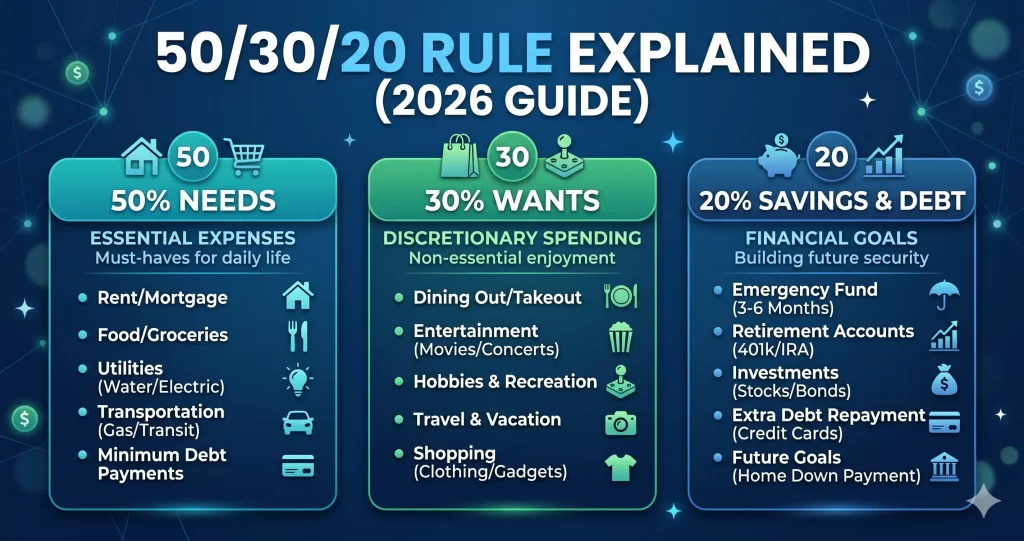
Budgeting can feel overwhelming when you first start managing your money.
Many people struggle because they:
- Overcomplicate budgeting
- Track too many categories
- Create unrealistic spending limits
That’s why the 50/30/20 rule became one of the most popular budgeting methods in the USA.
It’s simple, beginner-friendly, and easy to follow.
In this guide, you’ll learn:
- What the 50/30/20 rule is
- How it works
- Real US budgeting examples
- Benefits and disadvantages
- How to apply it to your income
By the end, you’ll know exactly how to create a realistic monthly budget.
🔥 QUICK ANSWER
The 50/30/20 rule is a budgeting method where:
- 50% of income goes to needs
- 30% goes to wants
- 20% goes to savings and debt repayment
👉 It’s one of the easiest budgeting systems for beginners.
📊 WHAT IS THE 50/30/20 RULE?
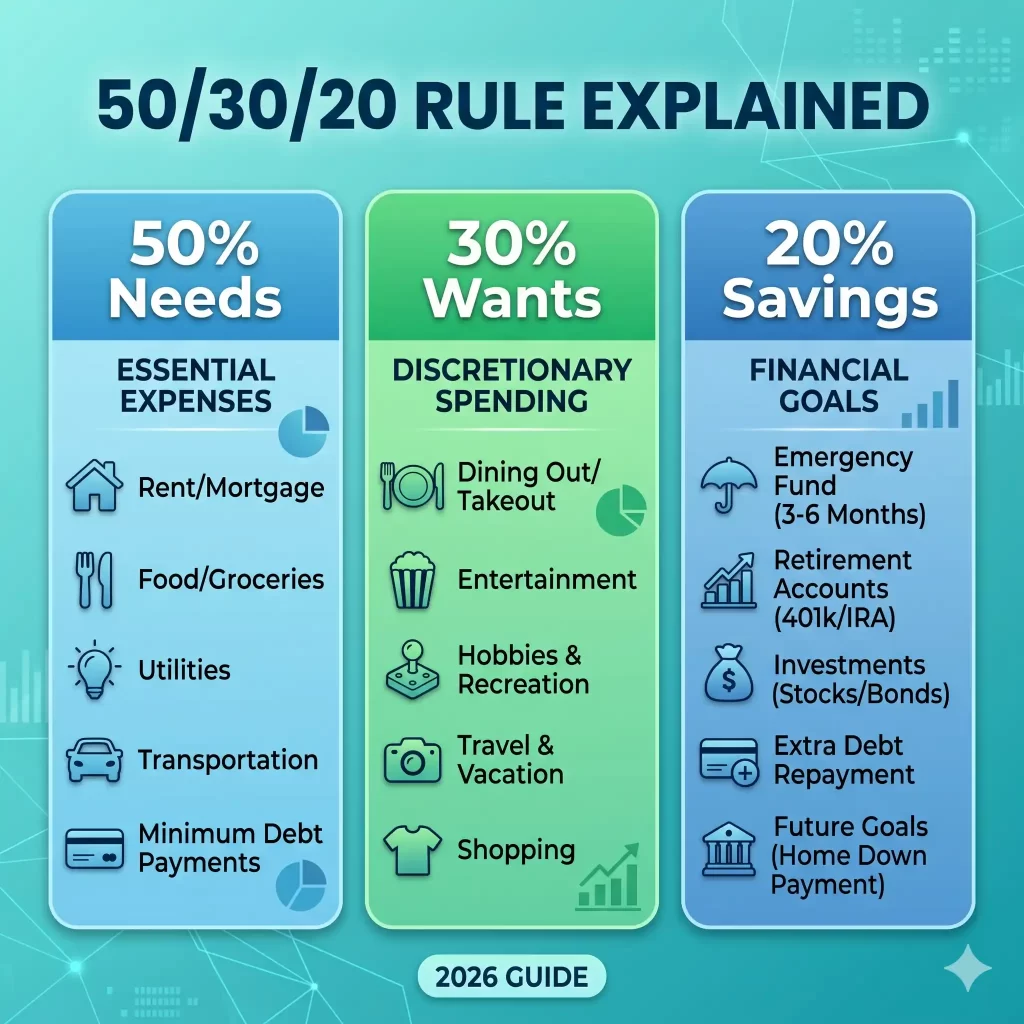
The 50/30/20 rule divides your after-tax income into three categories.
💵 50% → NEEDS
Needs are essential expenses required for living.
Examples:
- Rent or mortgage
- Utilities
- Groceries
- Transportation
- Insurance
- Minimum debt payments
👉 These are expenses you cannot easily avoid.
🛍 30% → WANTS
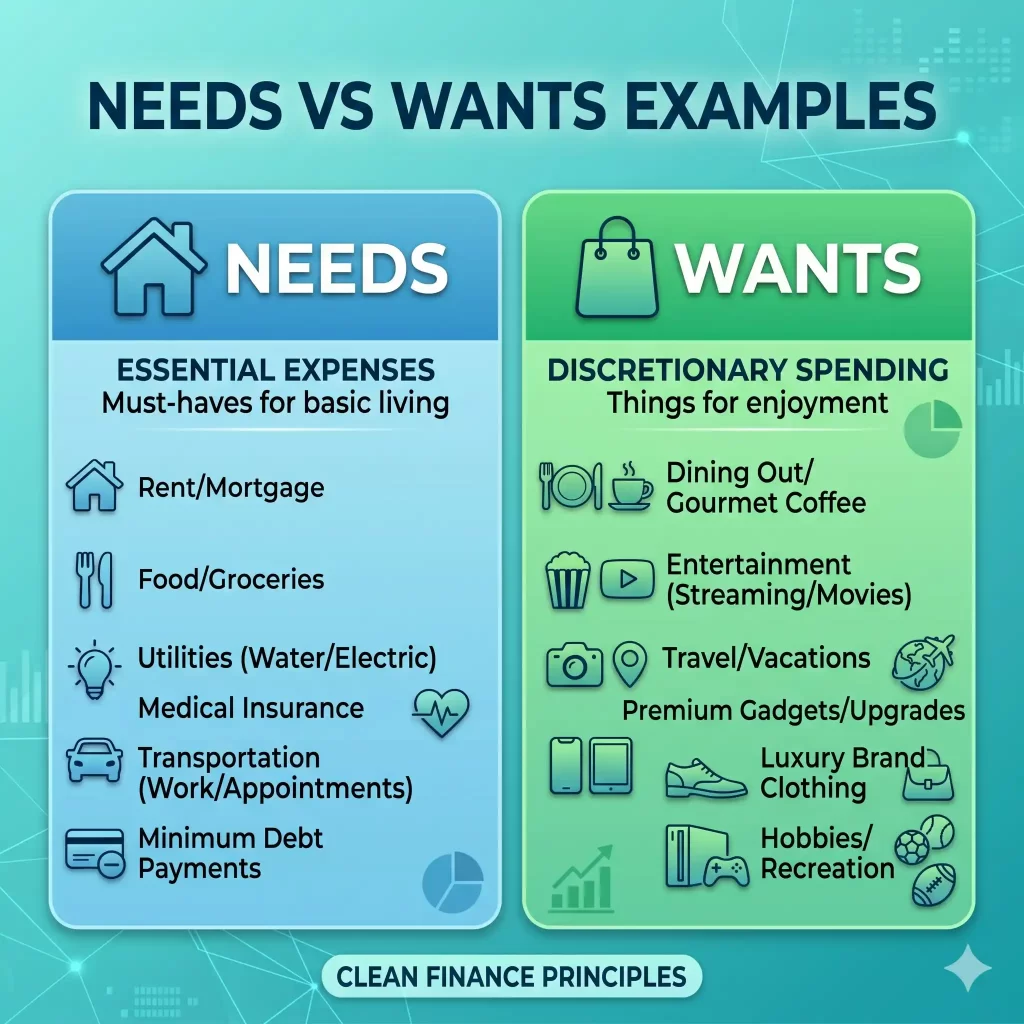
Wants are non-essential lifestyle expenses.
Examples:
- Streaming services
- Dining out
- Shopping
- Vacations
- Entertainment
👉 Wants improve lifestyle but aren’t necessary for survival.
💰 20% → SAVINGS & DEBT PAYOFF
This category focuses on financial growth and stability.
Examples:
- Emergency fund
- Retirement savings
- Investments
- Extra debt payments
👉 This is where long-term financial security is built.
📈 WHY THE 50/30/20 RULE IS SO POPULAR
The 50/30/20 method is popular because it’s:
✅ Simple
✅ Flexible
✅ Beginner-friendly
✅ Realistic for most households
Unlike strict budgeting systems, it allows room for enjoyment while still encouraging saving.
💡 REAL US EXAMPLE OF THE 50/30/20 RULE
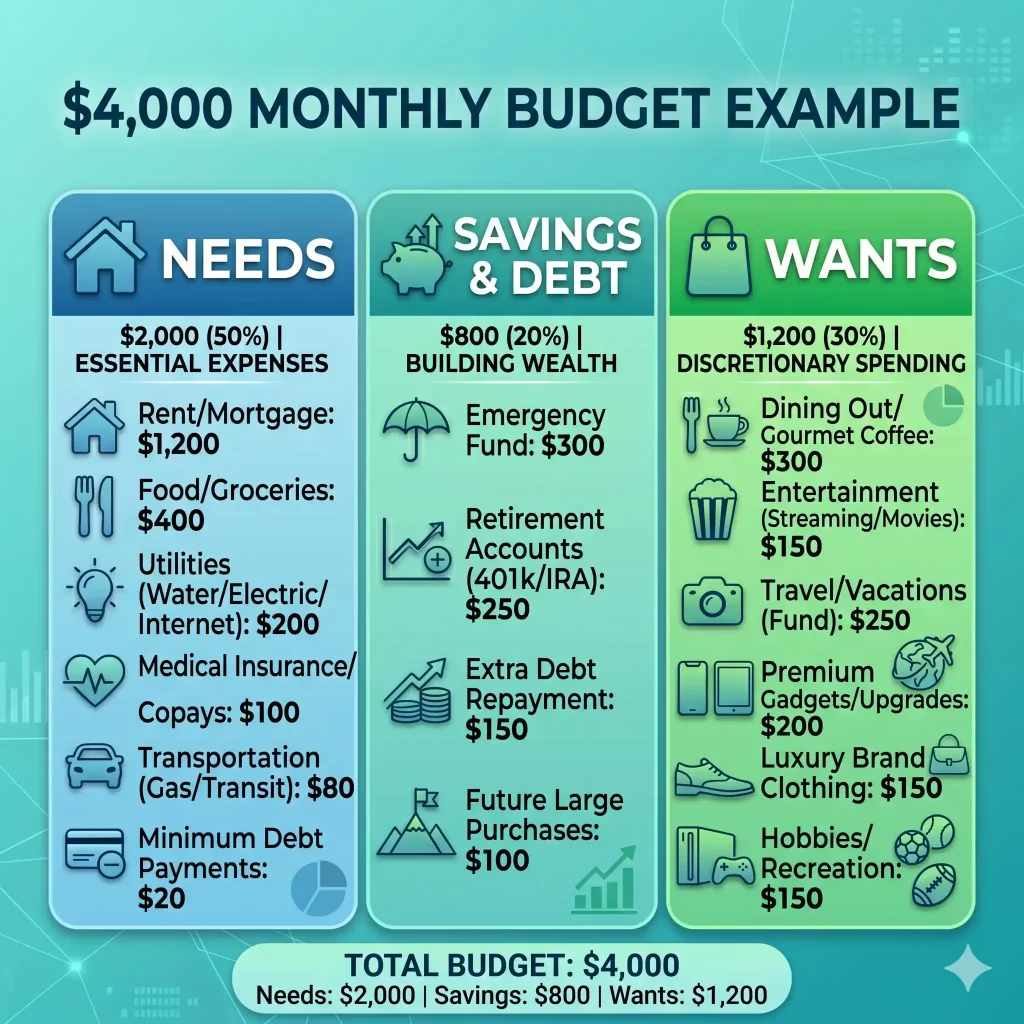
Example Monthly Income:
$4,000 after taxes
🔹 Needs (50%)
Budget:
$2,000
Expenses:
- Rent → $1,200
- Utilities → $200
- Groceries → $400
- Transportation → $200
🔹 Wants (30%)
Budget:
$1,200
Expenses:
- Restaurants → $300
- Streaming → $50
- Shopping → $300
- Entertainment → $250
- Travel savings → $300
🔹 Savings & Debt (20%)
Budget:
$800
Uses:
- Emergency fund → $300
- Retirement → $300
- Extra debt payment → $200
👉 This creates a balanced financial plan.
🚀 HOW TO START USING THE 50/30/20 RULE
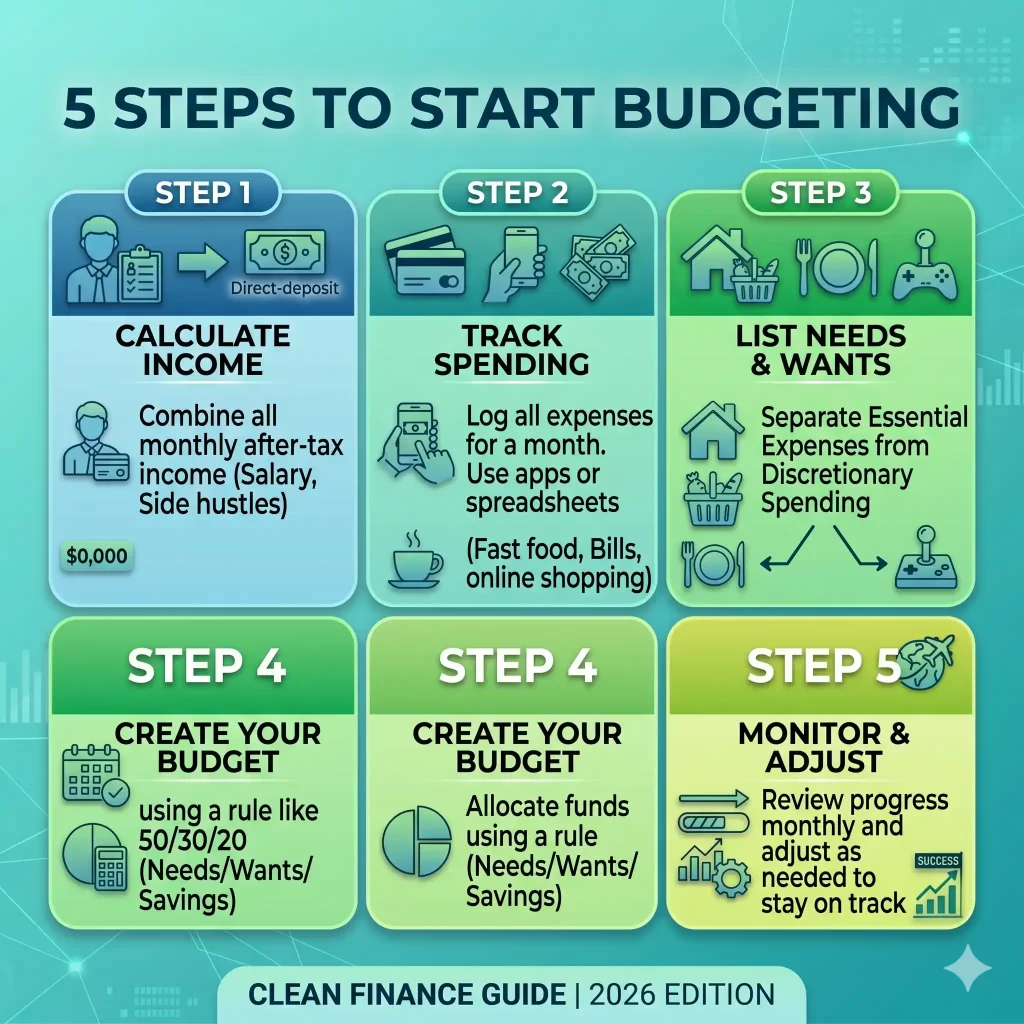
Step 1: Calculate After-Tax Income
Use your take-home pay after:
- Taxes
- Insurance
- Retirement deductions
👉 Accurate income calculation is important.
Step 2: Track Current Expenses
Review:
- Bank statements
- Credit card transactions
- Monthly bills
👉 Many people underestimate spending.
Step 3: Categorize Spending
Split all expenses into:
- Needs
- Wants
- Savings
👉 This reveals spending habits quickly.
Step 4: Adjust Spending
If your “wants” exceed 30%, reduce:
- Dining out
- Shopping
- Subscriptions
Step 5: Automate Savings
Set automatic transfers to:
- Savings accounts
- Investment accounts
👉 Automation improves consistency.
⚡ BENEFITS OF THE 50/30/20 RULE
✅ Easy to understand
No complicated spreadsheets required.
✅ Helps reduce overspending
Spending categories create accountability.
✅ Encourages saving
The 20% category prioritizes financial growth.
✅ Flexible lifestyle budgeting
You can still enjoy entertainment and hobbies.
⚠️ DISADVANTAGES OF THE 50/30/20 RULE
❌ Difficult in high-cost cities
Rent may exceed 50% in some US cities.
❌ Doesn’t fit every income level
Low-income households may struggle to save 20%.
❌ Requires self-discipline
The system only works if you follow it consistently.
📊 HOW TO ADAPT THE RULE FOR LOW INCOME
If your expenses are high:
👉 Modify percentages temporarily.
Example:
- Needs → 60%
- Wants → 20%
- Savings → 20%
👉 The goal is progress, not perfection.
💸 BEST TOOLS FOR THE 50/30/20 RULE
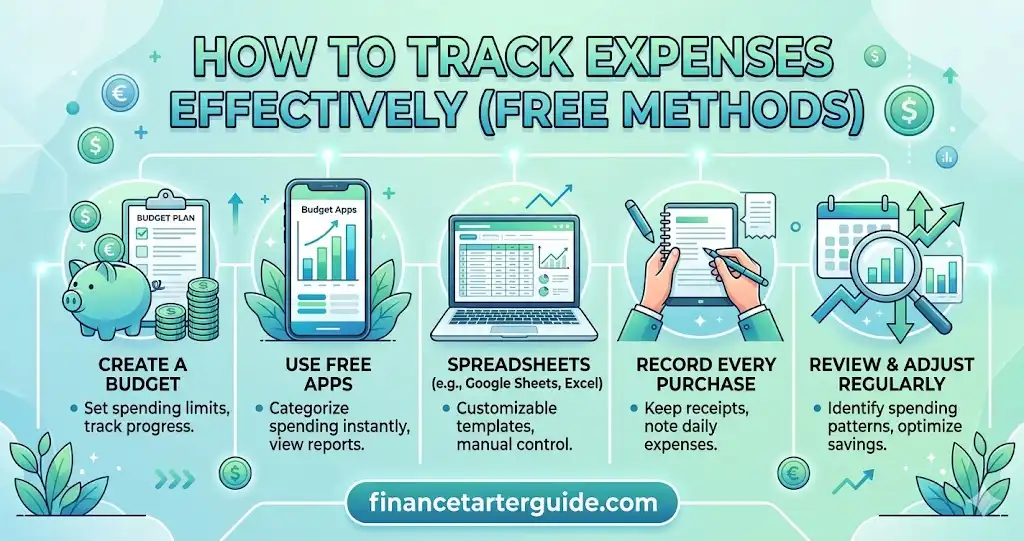
You can use:
- Budgeting apps
- Spreadsheets
- Banking apps
- Expense trackers
👉 Digital tools make budgeting easier.
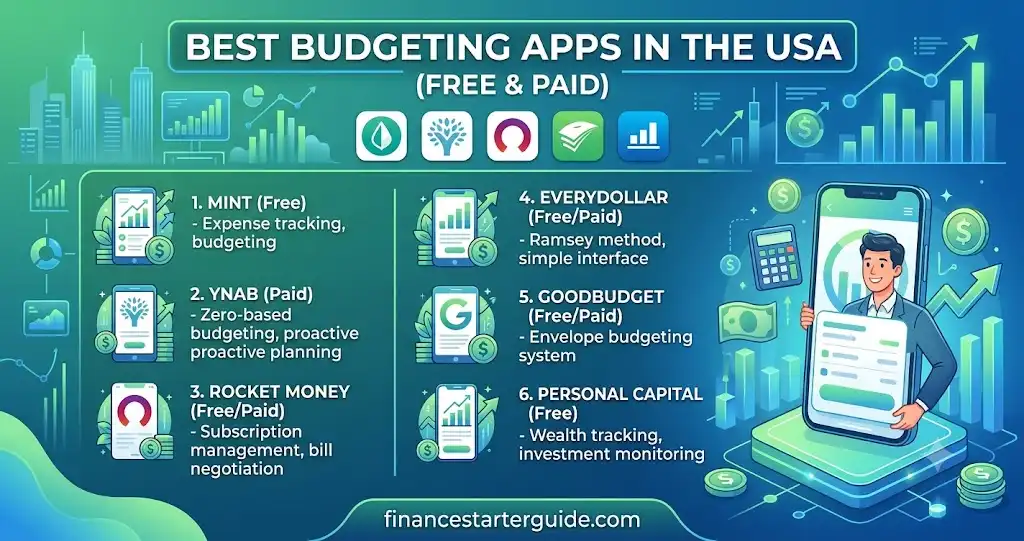
📱 BEST BUDGETING APPS FOR THIS METHOD
Useful features include:
- Expense categories
- Spending alerts
- Savings tracking
👉 Automation helps maintain consistency.
🔥 COMMON MISTAKES PEOPLE MAKE
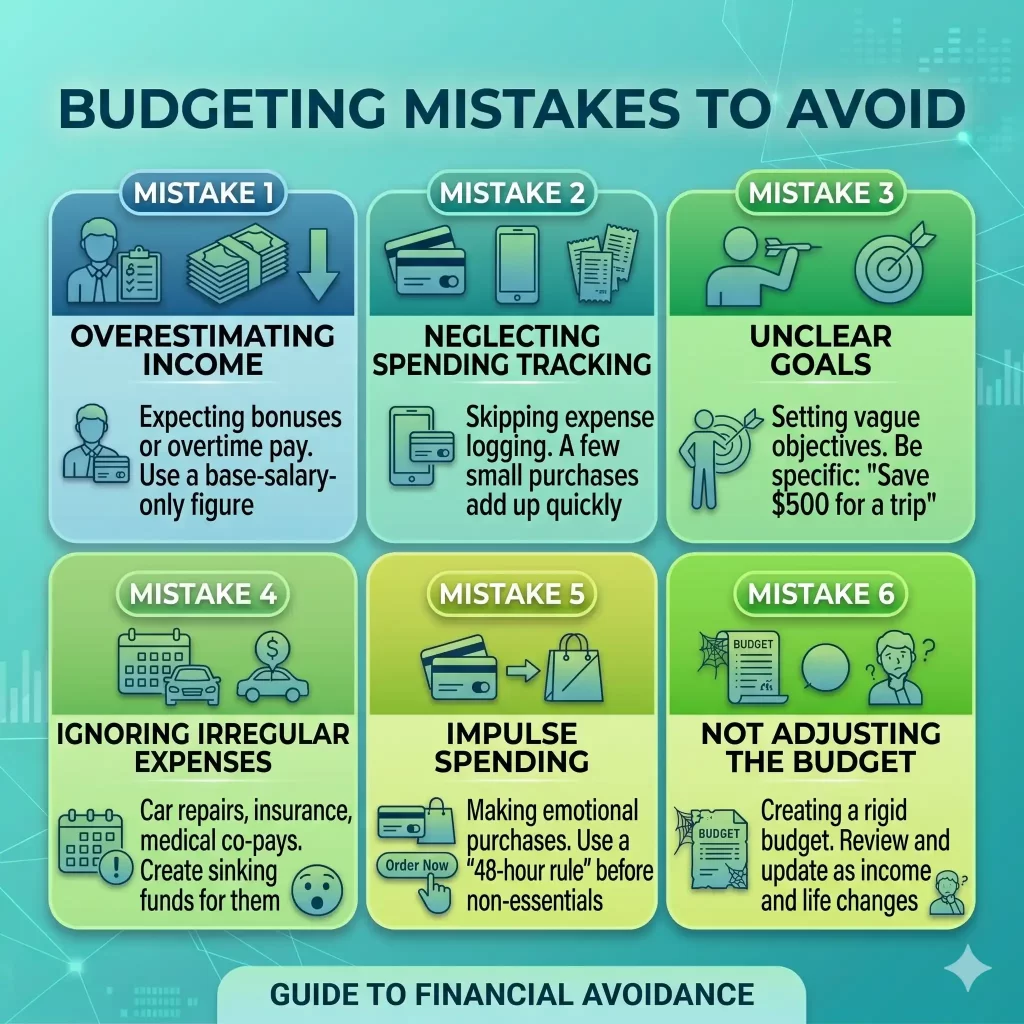
❌ Misclassifying wants as needs
Examples:
- Expensive dining
- Luxury shopping
❌ Ignoring irregular expenses
Examples:
- Car repairs
- Medical bills
- Holidays
❌ Not reviewing budgets monthly
Financial situations change regularly.
❌ Saving only leftover money
Savings should be planned first.
🏦 HOW THE 50/30/20 RULE HELPS BUILD WEALTH
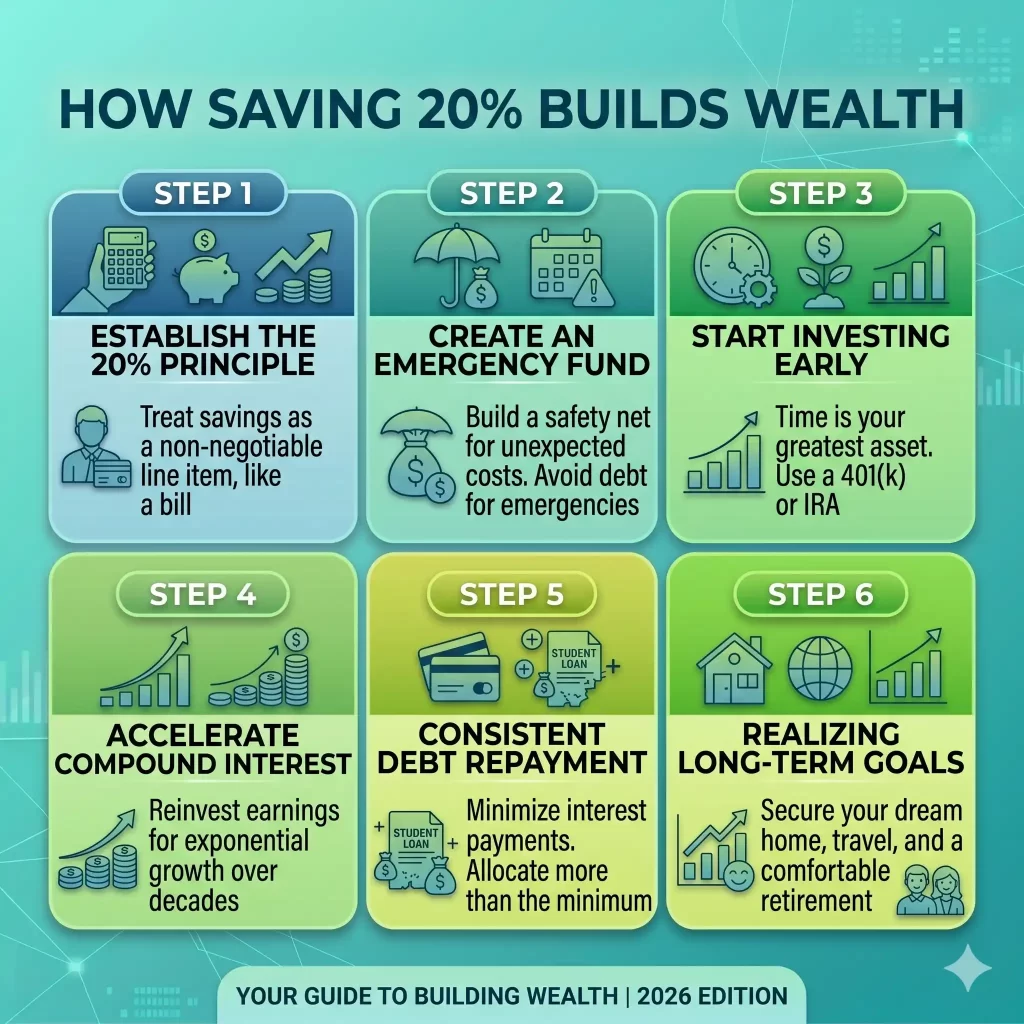
Long-term saving creates:
- Emergency funds
- Investment growth
- Reduced financial stress
👉 Small monthly savings compound significantly over time.
💳 HOW THIS RULE IMPROVES CREDIT SCORE
Good budgeting helps:
- Avoid late payments
- Reduce credit card debt
- Lower credit utilization
👉 Financial organization improves credit health.
📈 50/30/20 RULE VS OTHER BUDGETING METHODS
| Method | Best For |
|---|---|
| 50/30/20 | Beginners |
| Zero-based budgeting | Detailed planners |
| Envelope system | Cash spenders |
| Pay yourself first | Saving-focused users |
👉 The 50/30/20 rule is the easiest starting point.
🧠 FAQ SECTION
What is the 50/30/20 rule?
The 50/30/20 rule is a budgeting method dividing income into needs, wants, and savings.
Is the 50/30/20 rule good for beginners?
Yes, it’s one of the easiest budgeting systems for beginners.
Does the 50/30/20 rule work on low income?
Yes, but percentages may need adjustment based on expenses.
What counts as needs in the 50/30/20 rule?
Needs include rent, groceries, utilities, transportation, and insurance.
Can the 50/30/20 rule help save money?
Yes, it encourages consistent saving and spending awareness.
- What is a budget?
- Best budgeting apps in the USA
- How to save money fast
- How to improve credit score fast
🏆 FINAL THOUGHTS
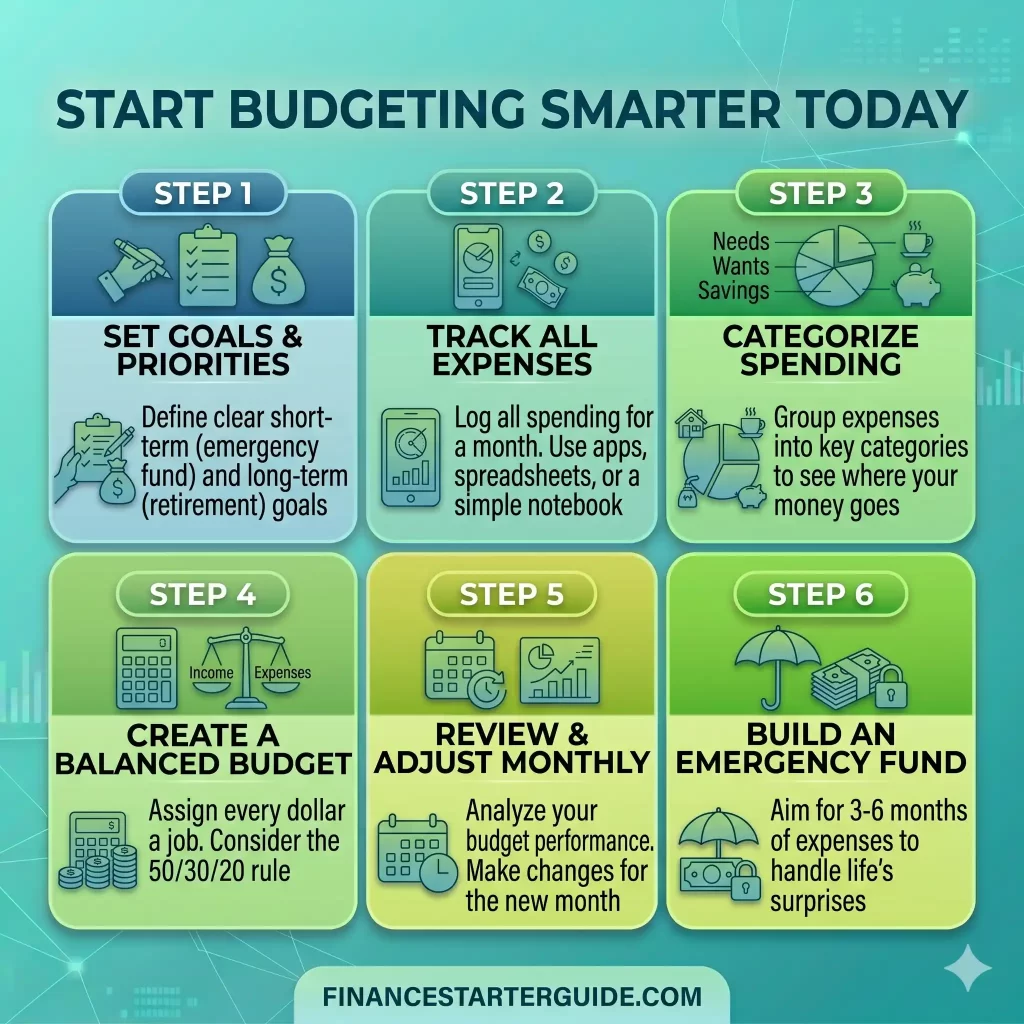
The 50/30/20 rule is one of the best budgeting systems for beginners because it’s simple, realistic, and effective.
You don’t need perfect finances to start budgeting successfully.
👉 Focus on:
- Awareness
- Consistency
- Long-term habits
Small financial improvements create major long-term results.
Disclaimer: This article is for educational and informational purposes only and does not constitute financial, investment, tax, or legal advice.
Pingback: Top 15 Money Saving Tips That Actually Work in the USA (2026 Guide)
Pingback: Best Budgeting Apps in the USA (Free & Paid) 2026 Guide - Finance Starter Guide
Pingback: How to Save Money Fast on a Low Income (USA Guide 2026)
Pingback: How to Save $1000 Fast (Realistic Plan for Beginners USA 2026)
Pingback: Emergency Fund: How Much Do You Really Need? (USA Guide 2026)
Pingback: How to Track Expenses Effectively (Free Methods)
Pingback: How Millennials Can Build Wealth from Scratch (Complete 2026 Guide)