
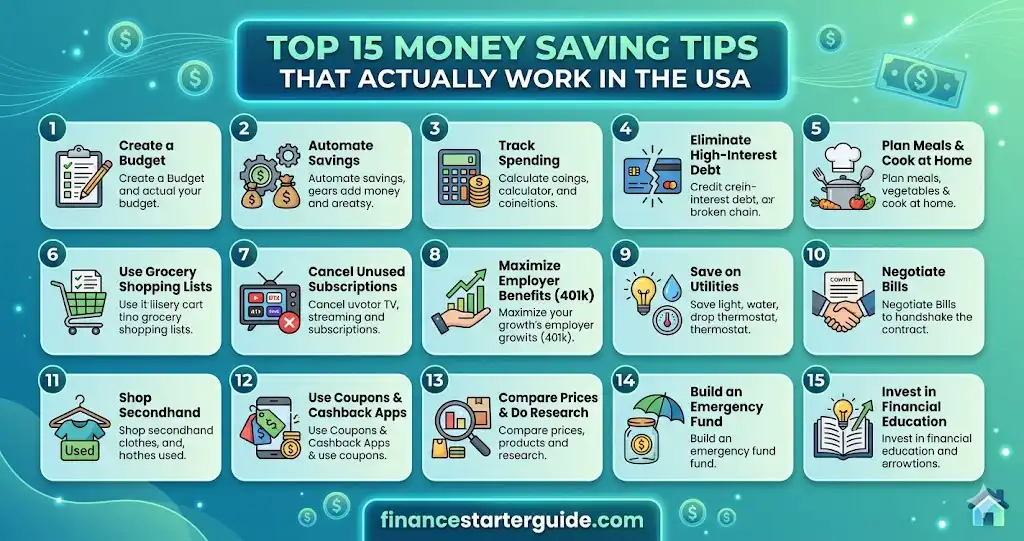
Saving money has become more important than ever in the United States.
With rising costs for:
- Rent
- Food
- Transportation
- Insurance
- Utilities
Many Americans are searching for realistic ways to reduce expenses and improve financial stability.
The good news?
You don’t need to earn a huge salary to save money effectively.
Small financial habits repeated consistently can create massive long-term results.
In this guide, you’ll discover 15 money saving tips that actually work in the USA in 2026.
🔥 QUICK ANSWER
The best money saving tips include:
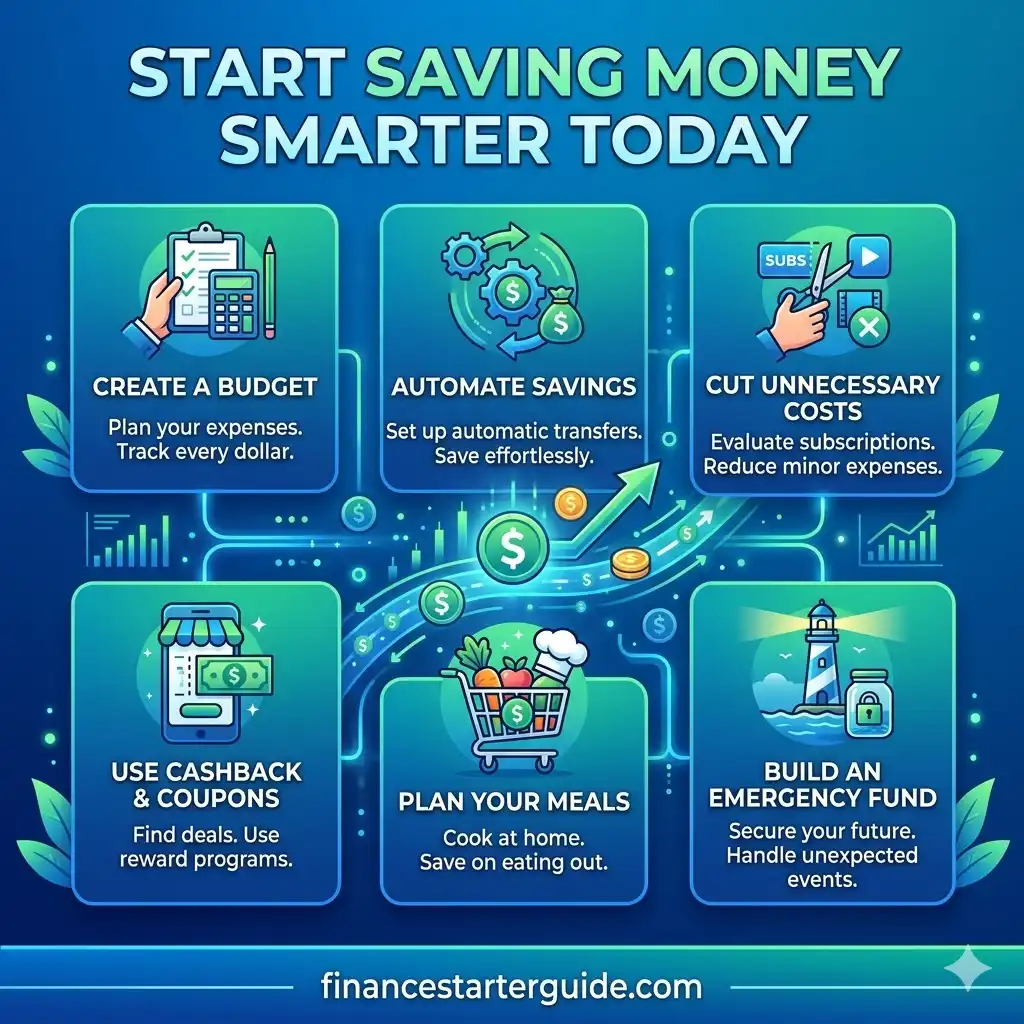
- Creating a budget
- Tracking expenses
- Cooking at home
- Canceling unused subscriptions
- Avoiding impulse purchases
- Automating savings
👉 Small financial habits can save hundreds of dollars monthly.
📊 WHY SAVING MONEY MATTERS
Saving money helps you:
✅ Build emergency savings
✅ Reduce stress
✅ Avoid debt
✅ Improve financial security
✅ Reach long-term financial goals
👉 Financial stability starts with consistent habits.
💡 TIP #1 CREATE A MONTHLY BUDGET
A budget helps you:
- Track spending
- Control expenses
- Save consistently
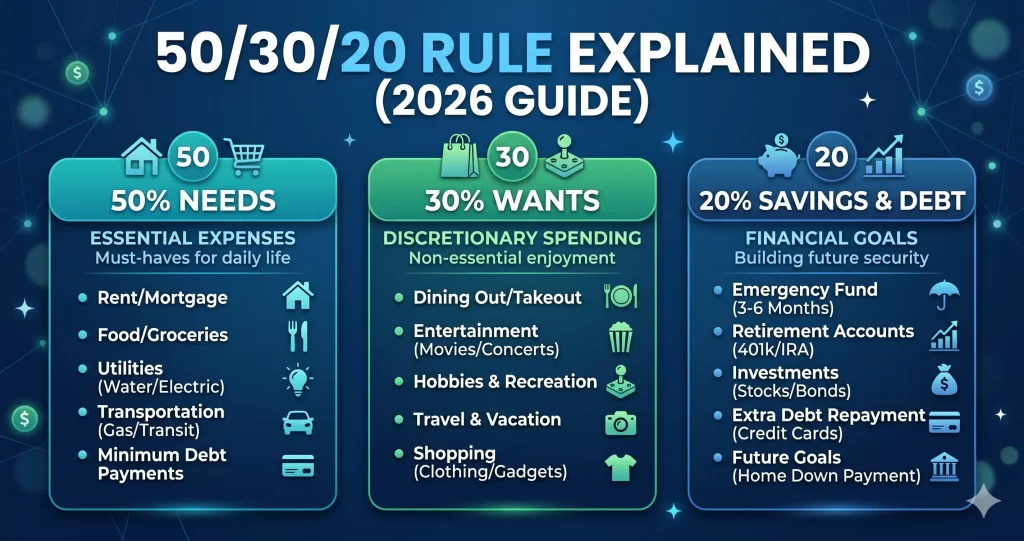
🔥 USE THE 50/30/20 RULE
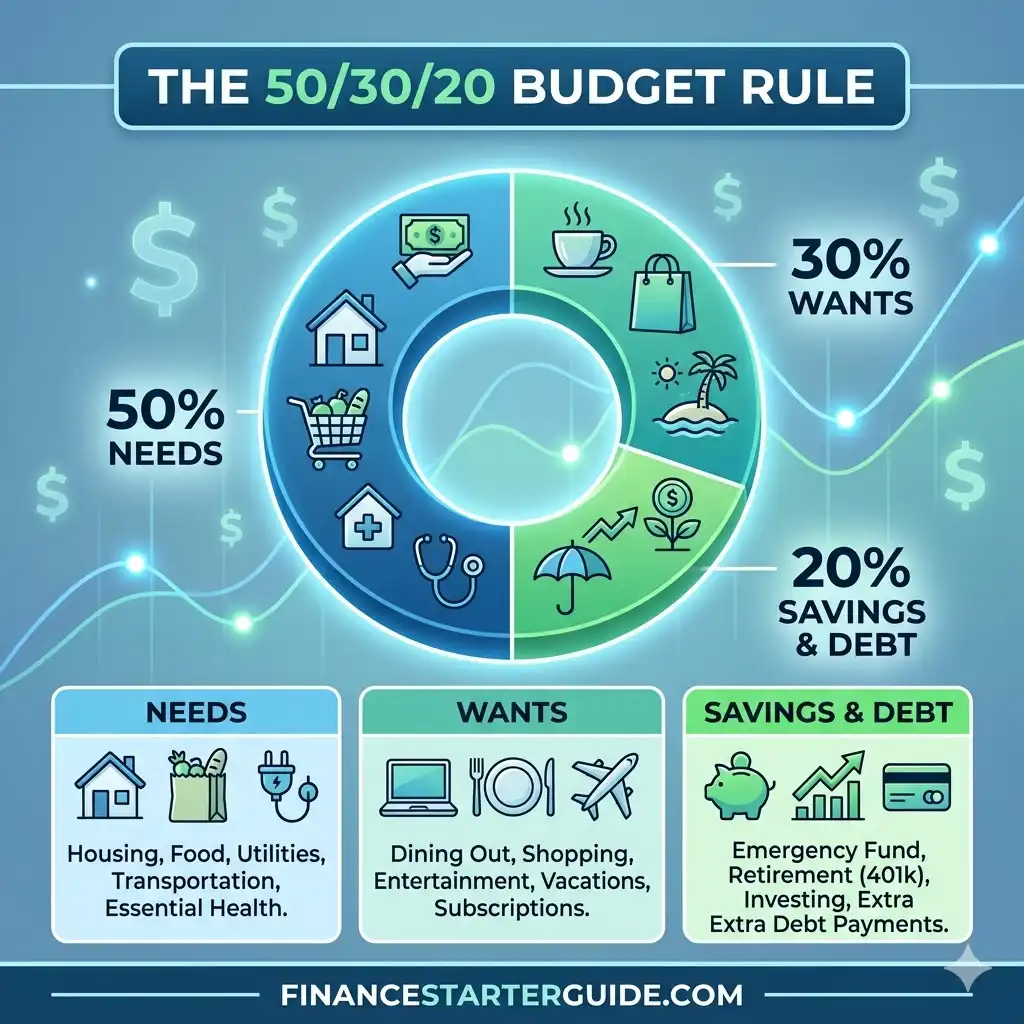
One of the easiest budgeting systems:
- 50% Needs
- 30% Wants
- 20% Savings
👉 This method is beginner-friendly and realistic.
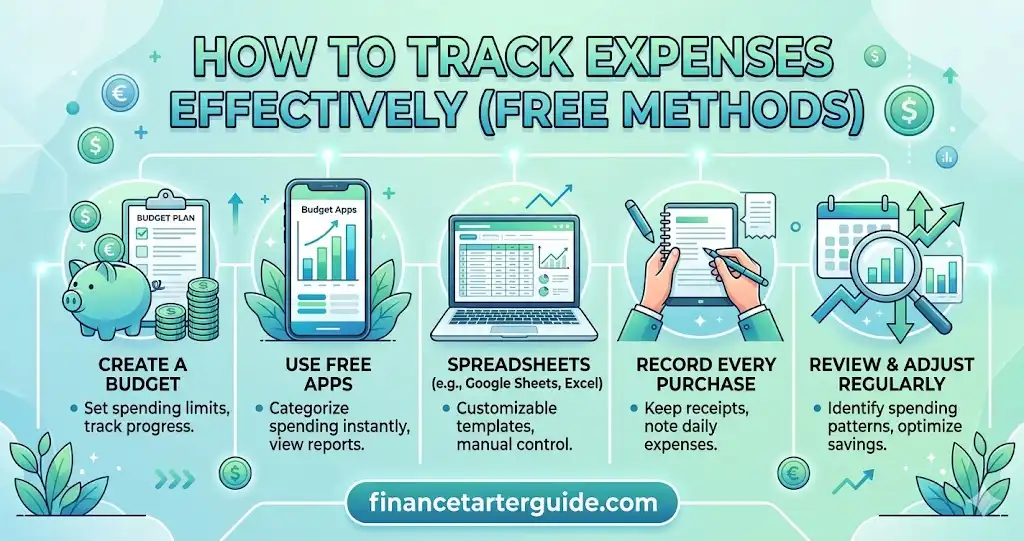
💸 TIP #2 TRACK EVERY EXPENSE
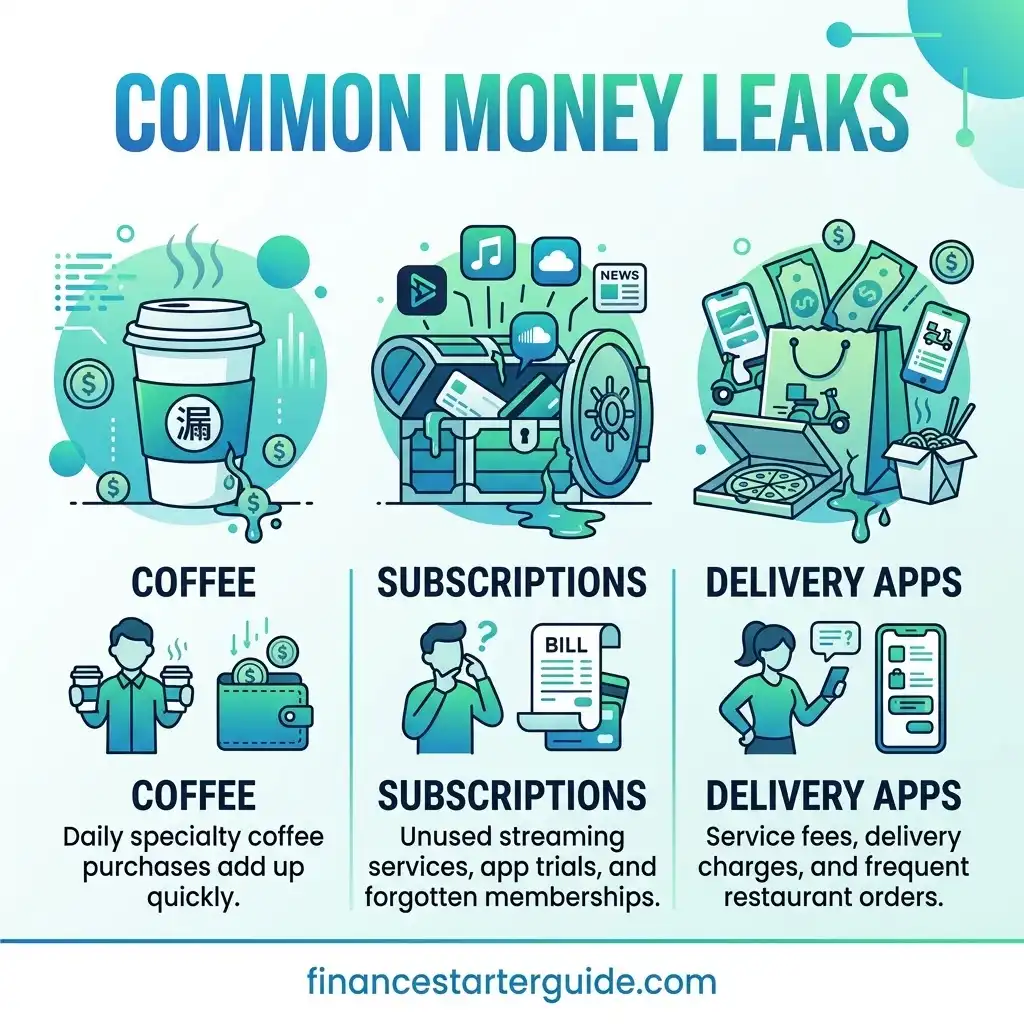
Most people underestimate daily spending.
Common hidden expenses:
- Coffee
- Food delivery
- Online shopping
- Streaming subscriptions
👉 Expense tracking increases awareness immediately.
🍔 TIP #3 COOK AT HOME MORE OFTEN
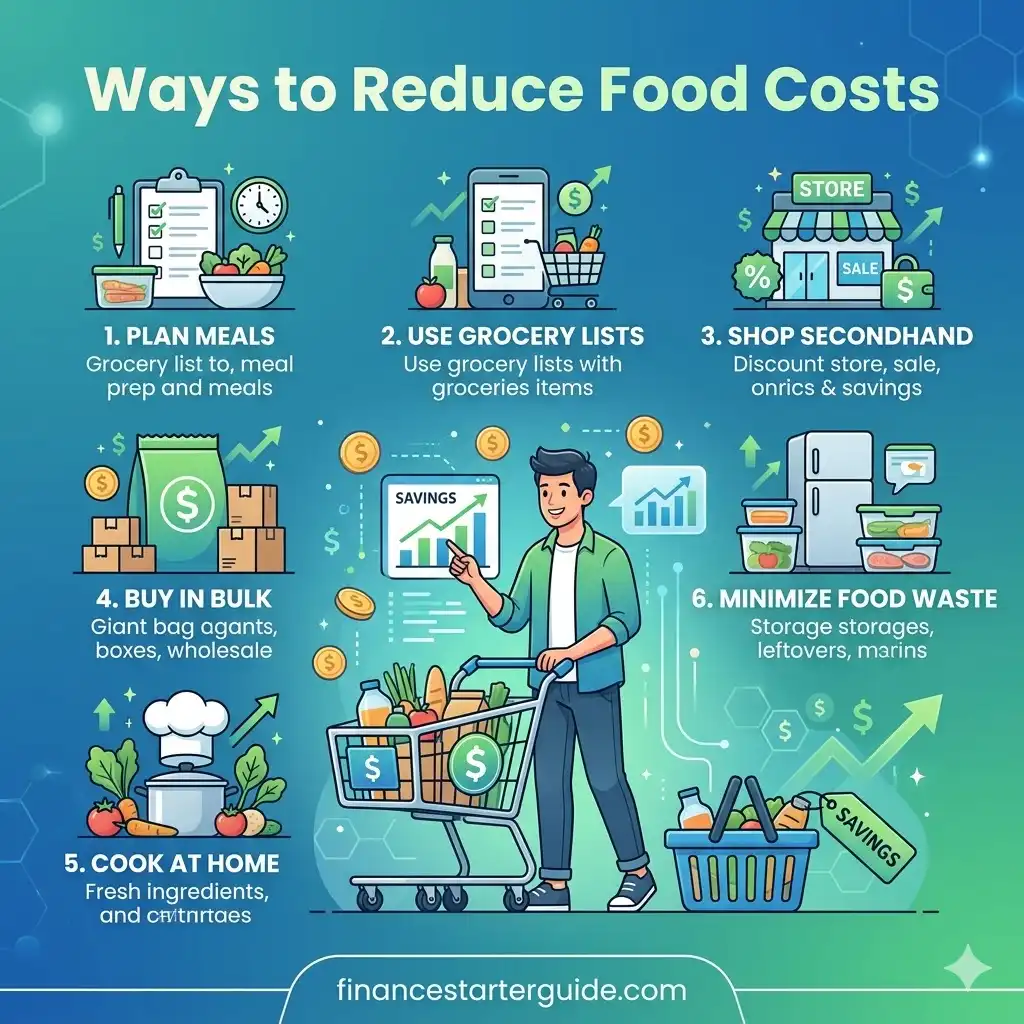
Eating out frequently destroys budgets quickly.
✅ Ways to Reduce Food Costs
- Meal prep weekly
- Buy groceries in bulk
- Use coupons
- Avoid food delivery apps
👉 Food savings can easily reach hundreds monthly.
📺 TIP #4 CANCEL UNUSED SUBSCRIPTIONS
Many Americans pay for subscriptions they rarely use.
Examples:
- Streaming services
- Fitness apps
- Gaming memberships
👉 Review subscriptions every month.
🛍 TIP #5 STOP IMPULSE BUYING
Impulse spending is one of the biggest money killers.
✅ USE THE 24-HOUR RULE
Before buying non-essential items:
👉 Wait 24 hours.
Most impulse purchases lose appeal after waiting.
🚗 TIP #6 LOWER TRANSPORTATION COSTS
Transportation is expensive in the USA.
Ways to save:
- Carpool
- Use public transportation
- Combine errands
- Compare insurance quotes
👉 Fuel and maintenance costs add up quickly.
⚡ TIP #7 REDUCE UTILITY BILLS
Small energy-saving habits reduce monthly bills significantly.
Examples:
- Turn off unused lights
- Use LED bulbs
- Reduce AC usage
- Unplug electronics
💳 TIP #8 PAY OFF HIGH-INTEREST DEBT
Credit card interest can destroy financial progress.
🔥 PRIORITIZE:
- Credit cards
- Payday loans
- High-interest personal loans
👉 Paying off debt frees up future income.
📱 TIP #9 USE CASHBACK & REWARD APPS
Many apps help users save money automatically.
Examples:
- Grocery cashback apps
- Coupon apps
- Gas rewards
👉 Small discounts create long-term savings.
🏦 TIP #10 AUTOMATE YOUR SAVINGS
Automatic transfers improve consistency.
Example:
- Save $25 every paycheck automatically.
👉 Automation removes temptation to spend.
🛒 TIP #11 SHOP WITH A LIST
Shopping without a list often increases impulse purchases.
✅ BEFORE SHOPPING:
- Plan purchases
- Compare prices
- Avoid emotional spending
👉 Organized shopping reduces waste.
📈 TIP #12 BUILD AN EMERGENCY FUND
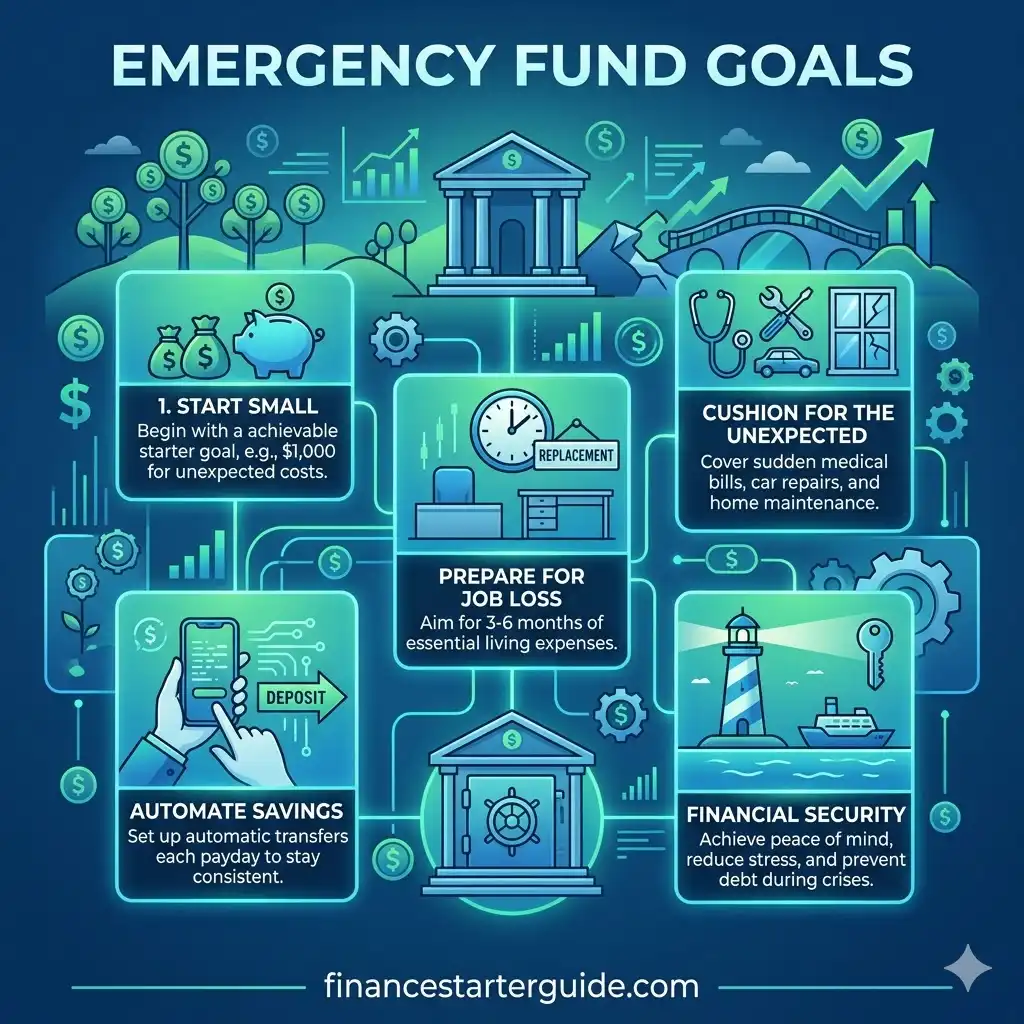
Unexpected expenses often create debt.
🔥 START SMALL:
- First goal → $100
- Then → $500
- Eventually → 3–6 months expenses
👉 Emergency savings reduce financial stress.
💡 TIP #13 INCREASE YOUR INCOME

Saving money becomes easier when income increases.
🔥 SIDE HUSTLE IDEAS
Online:
- Freelancing
- Content creation
- Selling digital products
Offline:
- Delivery driving
- Tutoring
- Pet sitting
👉 Even small extra income helps significantly.
🏠 TIP #14 REDUCE HOUSING COSTS
Housing is usually the largest monthly expense.
Ways to save:
- Get roommates
- Move to cheaper areas
- Negotiate rent when possible
👉 Lower housing costs create major savings.
📊 TIP #15 REVIEW YOUR FINANCES MONTHLY
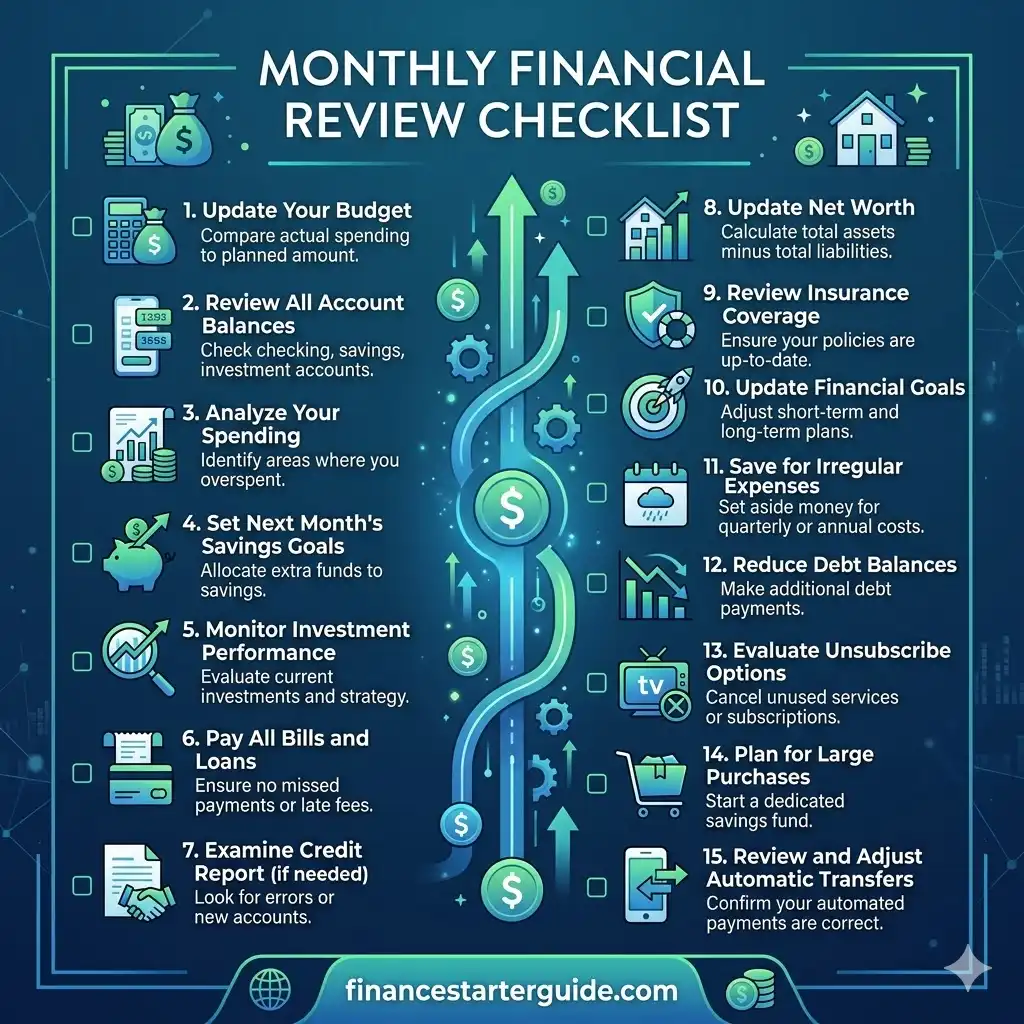
Monthly reviews help identify:
- Overspending
- Subscription waste
- Budget problems
👉 Financial awareness improves decision-making.
⚠️ COMMON MONEY SAVING MISTAKES
❌ Trying extreme budgets
Unrealistic plans fail quickly.
❌ Ignoring small expenses
Tiny purchases become huge monthly costs.
❌ No savings goals
Goals improve consistency and motivation.
❌ Relying on credit cards
Debt cancels saving progress.
💸 HOW MUCH MONEY CAN YOU REALISTICALLY SAVE?
Savings depend on:
- Income
- Expenses
- Debt levels
- Lifestyle choices
Many people save:
- $100–$500/month
By making consistent small improvements.
📈 HOW LONG DOES IT TAKE TO SEE RESULTS?
Many people notice improvements within:
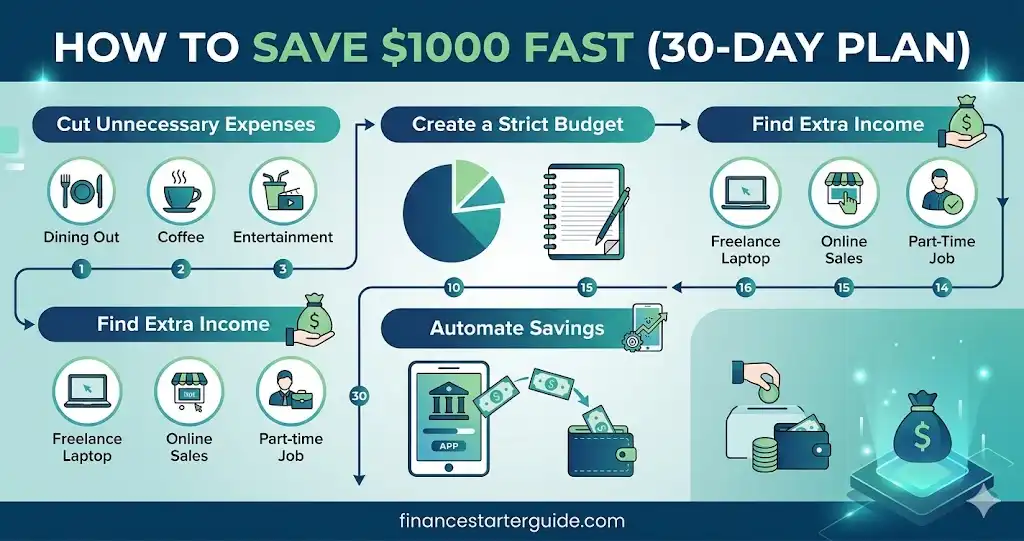
- 30 days
- 3 months
- 6 months
👉 Consistency matters more than perfection.
🔥 BEST MONEY SAVING HABITS FOR BEGINNERS
✅ Budget regularly
✅ Track spending weekly
✅ Avoid lifestyle inflation
✅ Save before spending
✅ Focus on long-term goals
👉 Strong habits create long-term financial stability.
🧠 FAQ SECTION
What are the best money saving tips?
The best money saving tips include budgeting, reducing unnecessary expenses, automating savings, and tracking spending.
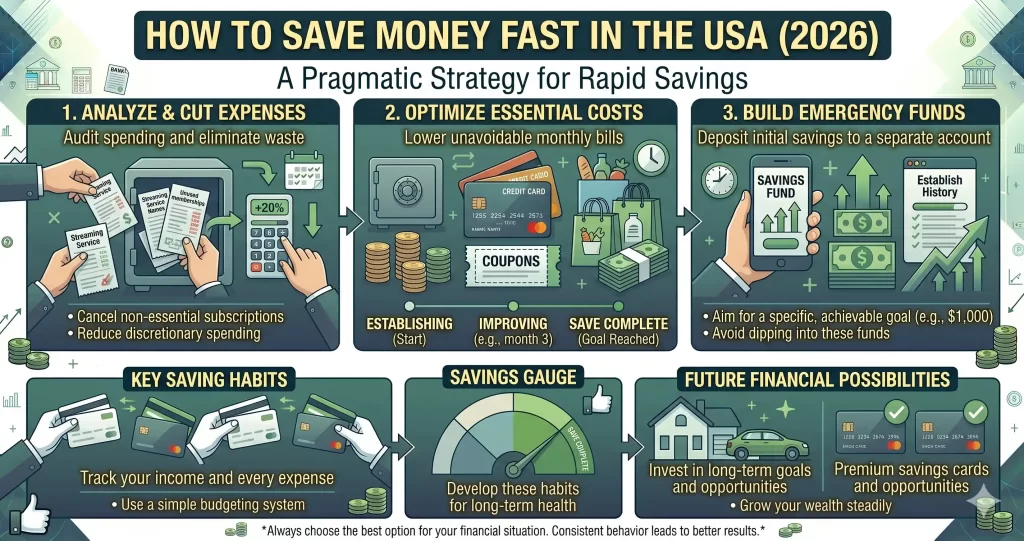
How can I save money fast in the USA?
You can save money fast by reducing food costs, canceling subscriptions, budgeting, and avoiding impulse purchases.
What is the easiest way to start saving money?
The easiest way is tracking expenses and automatically saving a small amount from every paycheck.
How much should I save monthly?
A common goal is saving at least 20% of income if possible.
Can small savings really make a difference?
Yes, small consistent savings create major long-term financial improvements.
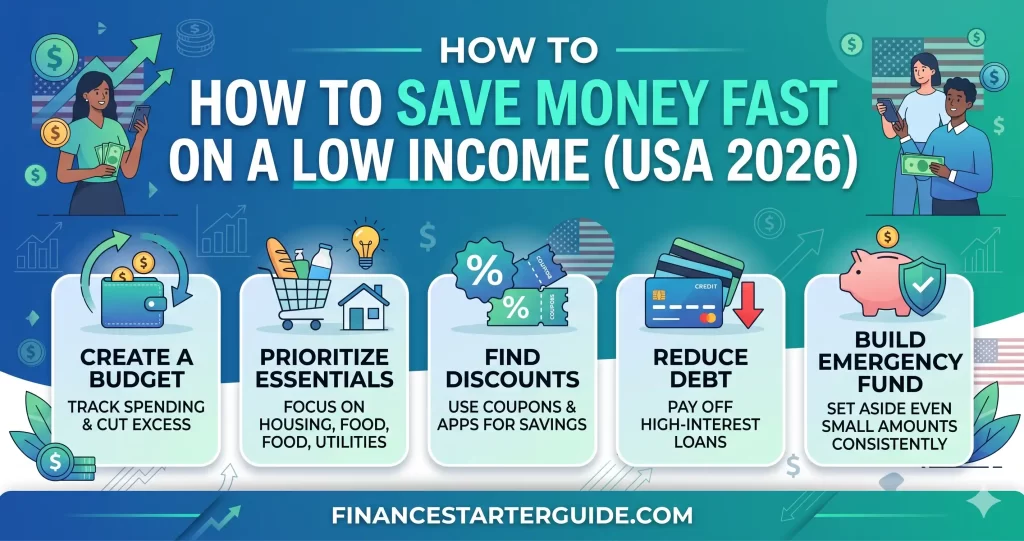
- How to save money fast on a low income
- 50/30/20 rule explained
- Best budgeting apps in the USA
- What is a budget?
🏆 FINAL THOUGHTS
Saving money does not require perfection.
The most important things are:
- Awareness
- Consistency
- Better financial habits
Small improvements repeated over time can completely change your financial future.
👉 Start with one or two tips today and build momentum gradually.
Disclaimer: This article is for educational and informational purposes only and does not constitute financial, investment, tax, or legal advice.




Pingback: Best Budgeting Apps in the USA (Free & Paid) 2026 Guide - Finance Starter Guide