Managing your money doesn’t have to be difficult. One of the easiest ways to gain control over your finances is by using a budget template. Instead of starting with a blank spreadsheet or trying to remember every expense, a well-designed budget template gives you a proven system to organize your income, spending, savings, and financial goals.
Whether you’re a college student, a young professional, a family managing household expenses, or someone trying to pay off debt, the right budget template can simplify your financial life. Best of all, many excellent templates are completely free.
This guide explains the best free budget templates for beginners in the USA, how each one works, who should use it, and how to choose the right template based on your financial situation. You’ll also learn practical budgeting tips that can help you stick to your budget long term.
Quick Answer
What are the best free budget templates for beginners?
The best free budget templates for beginners include:
- Monthly Budget Template
- 50/30/20 Budget Worksheet
- Zero-Based Budget Template
- Weekly Budget Planner
- Household Budget Spreadsheet
- Debt Payoff Tracker
- Savings Goal Tracker
- Expense Tracker Spreadsheet
These templates help organize income, monitor expenses, increase savings, and improve money management without costing anything.
Why Every Beginner Should Use a Budget Template
Many people think budgeting is complicated because they imagine creating spreadsheets from scratch. In reality, a template removes nearly all the hard work.
Instead of worrying about formulas and categories, you simply enter your numbers and review the results.
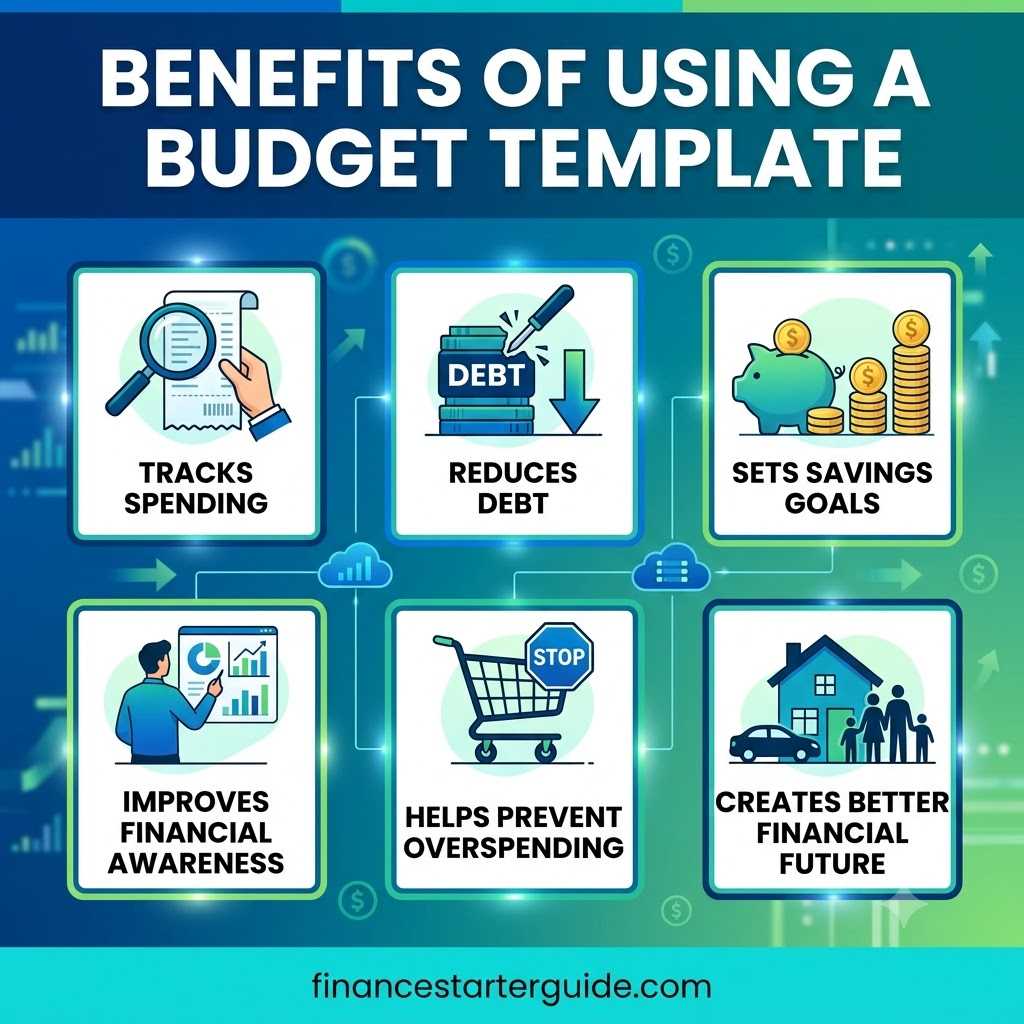
Using a budget template helps you:
- Understand exactly where your money goes
- Reduce unnecessary spending
- Build an emergency fund
- Pay bills on time
- Reach savings goals faster
- Reduce financial stress
- Stay organized every month
A template also creates consistency. Once you begin using the same budgeting system each month, it becomes much easier to recognize spending patterns and make better financial decisions.
What Makes a Good Budget Template?
Not every template is equally useful. The best templates are simple enough for beginners while still providing enough detail to help you make informed decisions.
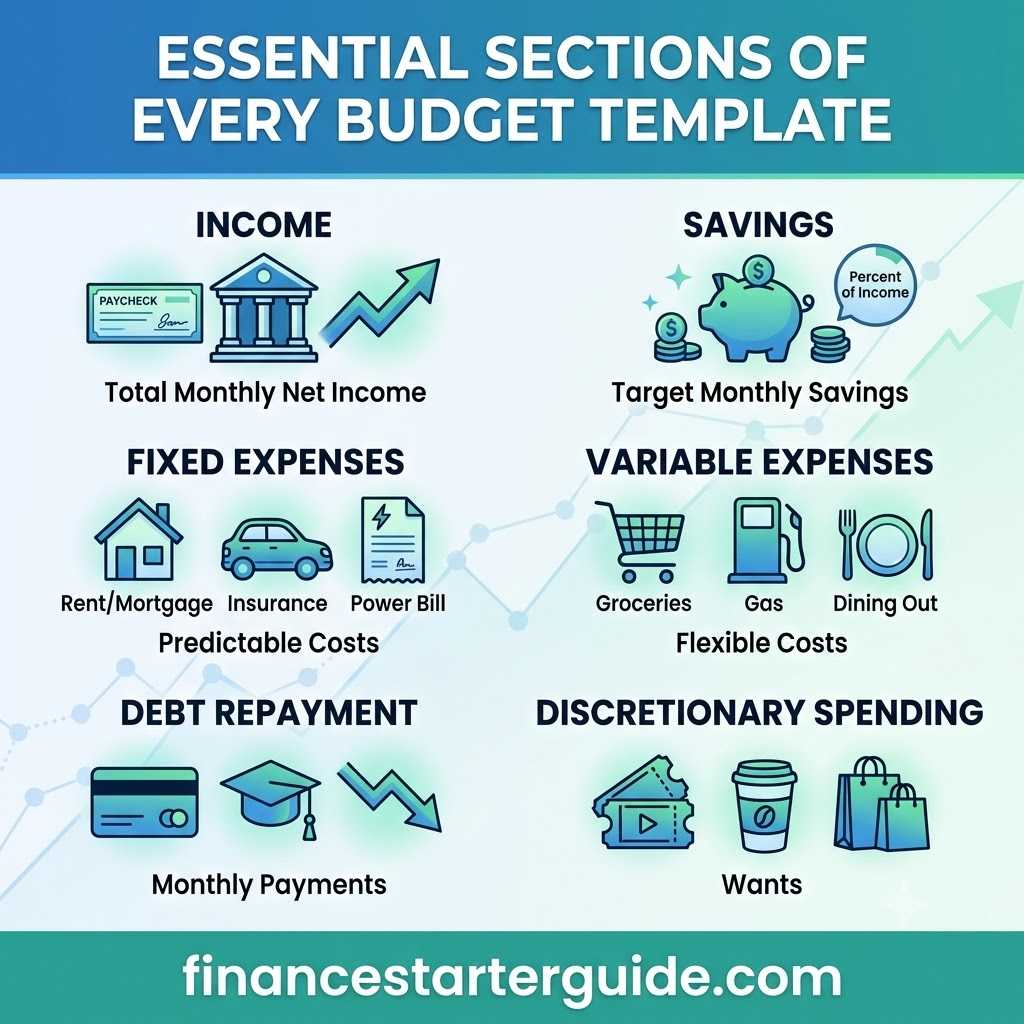
A quality budget template should include the following sections.
Income
Your template should allow you to record every source of income.
Examples include:
- Salary
- Hourly wages
- Freelance work
- Side hustles
- Rental income
- Government benefits
- Investment income
Always use your after-tax income when creating a personal budget.
Fixed Expenses
These are expenses that generally stay the same every month.
Examples include:
- Rent or mortgage
- Insurance
- Internet
- Phone bill
- Car payment
- Streaming subscriptions
Knowing your fixed expenses helps you understand how much money is already committed before discretionary spending begins.
Variable Expenses
Variable expenses change each month.
Examples include:
- Groceries
- Gas
- Dining out
- Entertainment
- Clothing
- Shopping
- Medical costs
Tracking these categories often reveals where small spending habits add up over time.
Savings
Every budget should include a dedicated savings section.
Possible savings categories include:
- Emergency fund
- Retirement
- Vacation
- Home down payment
- Holiday spending
- Education
- Investments
Saving should be treated like any other monthly expense rather than something you do only if money is left over.
Debt Payments
If you have debt, your template should include separate sections for:
- Credit cards
- Student loans
- Auto loans
- Personal loans
Tracking debt separately helps you monitor progress and stay motivated.
How Budget Templates Help You Save More Money
A budget template isn’t just about recording numbers. It changes the way you think about money.
Instead of wondering where your paycheck disappeared, you’ll know exactly:
- How much you earned
- How much you spent
- Which categories need improvement
- How much you saved
- Whether you’re meeting your financial goals
People who consistently review their budget often notice unnecessary subscriptions, impulse purchases, and recurring expenses they had forgotten about.
Even cutting $50–100 each month can add up to thousands of dollars over several years.
The Best Free Budget Templates for Beginners
1. Monthly Budget Template
The monthly budget template is the most popular option because it gives you a complete overview of your finances for the month.
It usually includes:
- Monthly income
- Fixed expenses
- Variable expenses
- Savings
- Debt payments
- Remaining balance
Best For
- First-time budgeters
- Families
- Employees with stable income
- Anyone wanting a simple monthly plan
Advantages
- Easy to understand
- Suitable for almost everyone
- Printable or digital
- Great for monthly financial planning
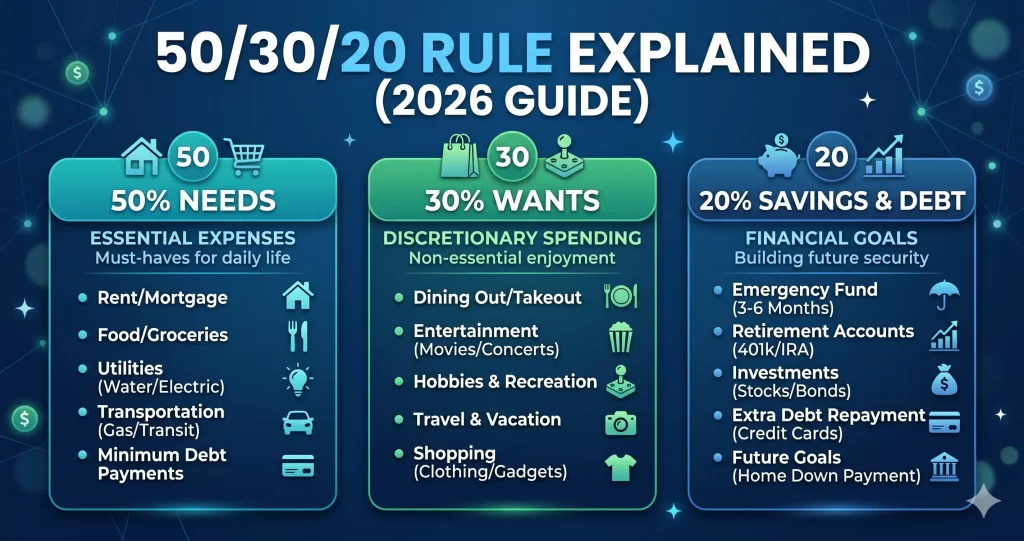
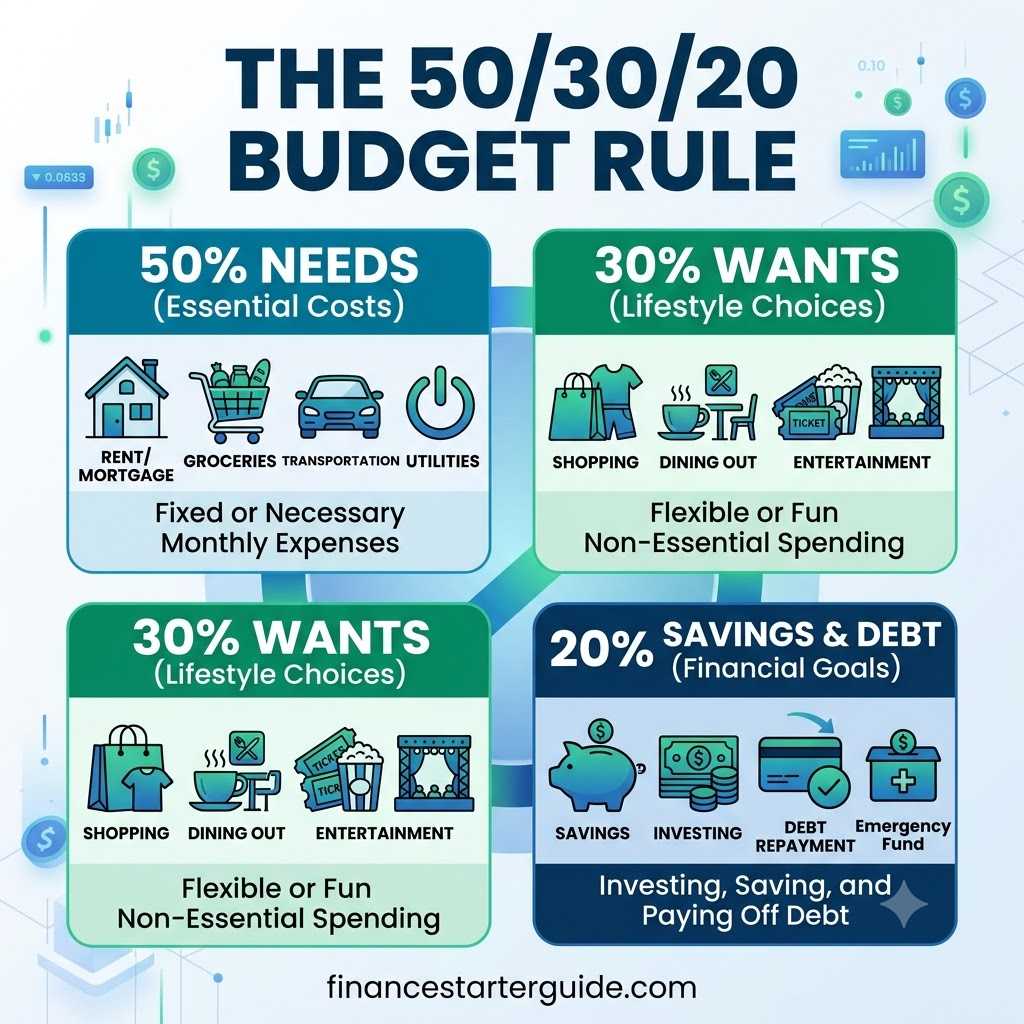
2. 50/30/20 Budget Template
This template follows the popular budgeting rule:
- 50% Needs
- 30% Wants
- 20% Savings and Debt
Instead of tracking dozens of spending categories, you only need to ensure your spending stays within these percentages.
Best For
- Beginners
- Busy professionals
- People who dislike detailed budgeting
Benefits
- Extremely easy to follow
- Flexible
- Encourages saving
- Prevents overspending
3. Zero-Based Budget Template
Zero-based budgeting assigns every dollar a purpose.
Income – Expenses – Savings = $0
This doesn’t mean you spend all your money. It means every dollar has a job before the month begins.
Best For
- People paying off debt
- Families
- Anyone wanting complete control over spending
Advantages
- Eliminates wasted money
- Improves intentional spending
- Helps increase savings
- Makes financial priorities clear
4. Weekly Budget Planner
Instead of budgeting monthly, this planner divides your spending into weekly limits.
This approach is especially helpful if you receive weekly paychecks or have irregular income.
Best For
- Students
- Freelancers
- Hourly workers
- Gig economy workers
Benefits
- Easier to monitor spending
- Prevents running out of money before month-end
- Encourages smaller financial goals
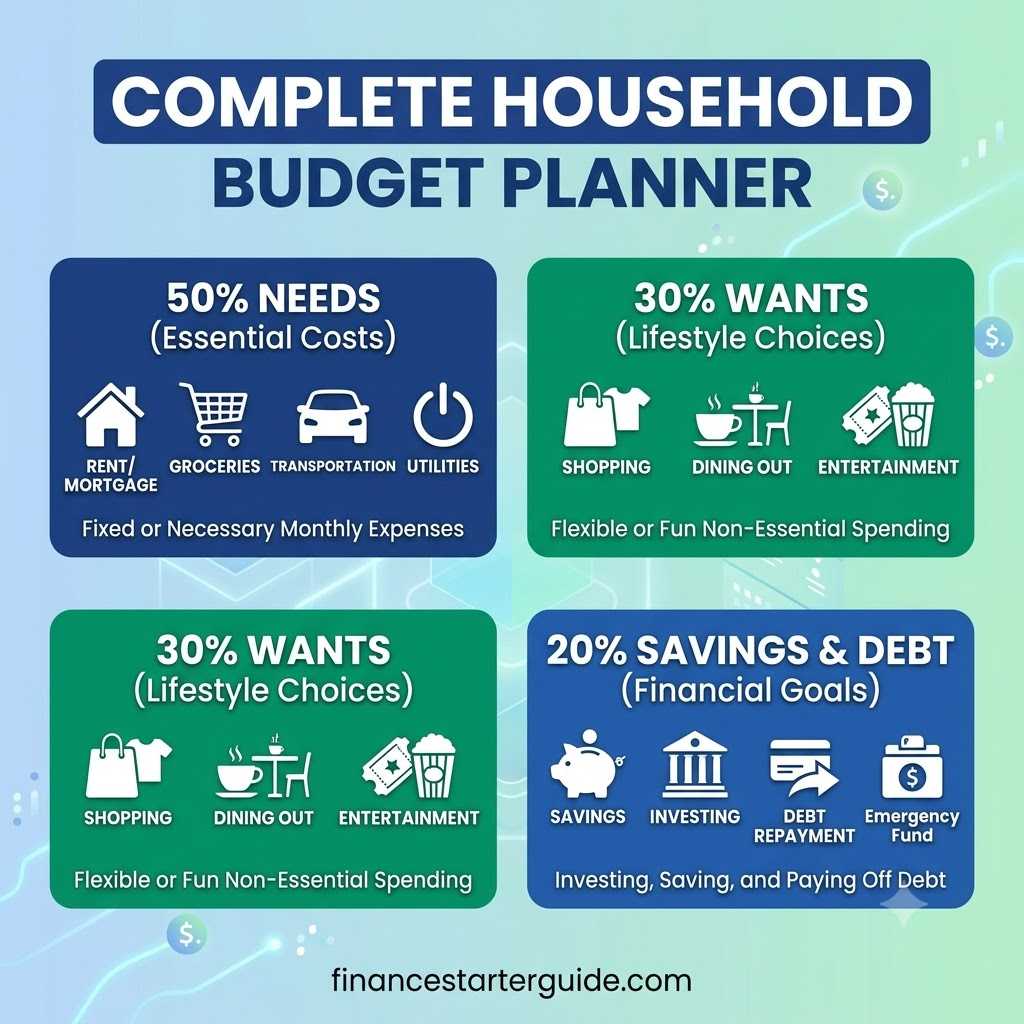
5. Household Budget Spreadsheet
Families often have many recurring expenses.
A household template usually includes:
- Utilities
- Groceries
- Childcare
- School expenses
- Transportation
- Home maintenance
- Entertainment
This provides a complete picture of household finances.
6. Debt Payoff Budget Template
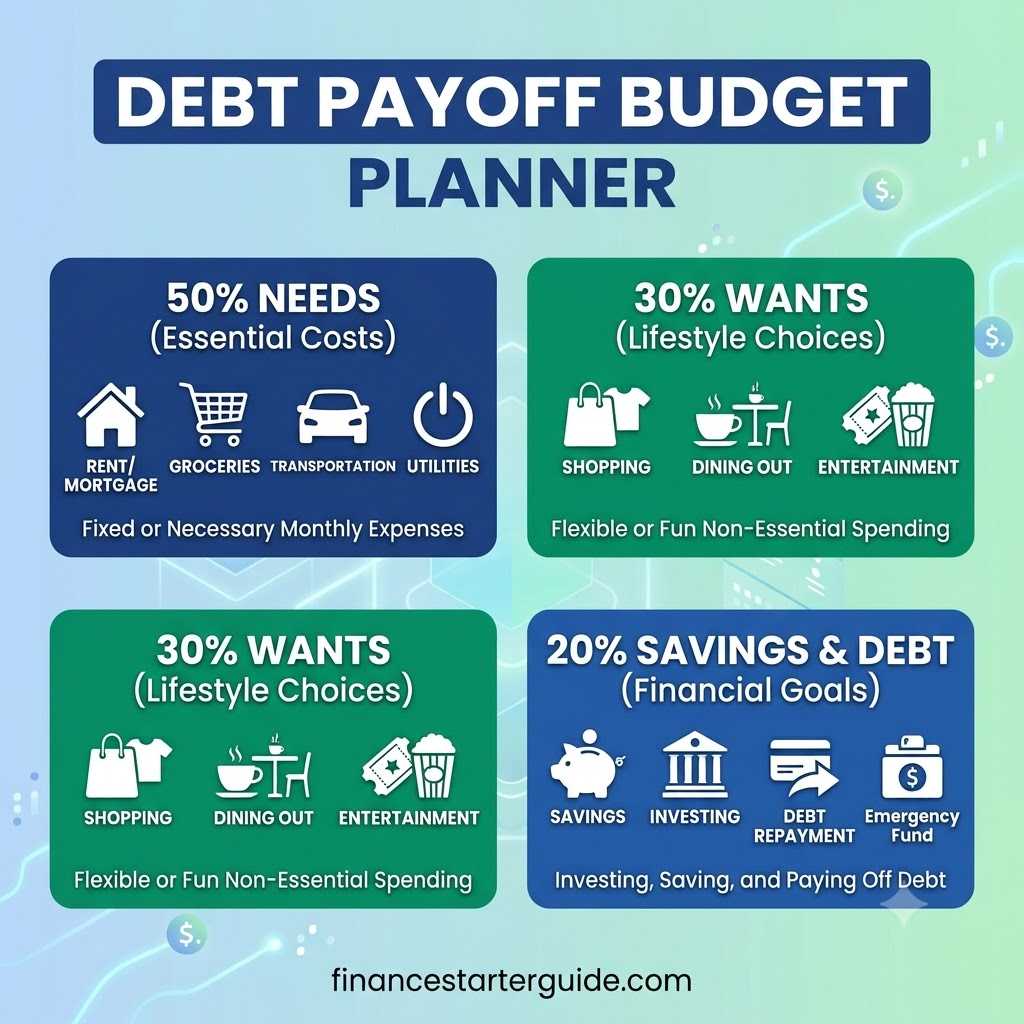
If you’re focused on becoming debt-free, a Debt Payoff Budget Template is one of the most valuable tools you can use. Unlike a standard budget, this template prioritizes debt repayment while ensuring your essential expenses are still covered.
Best For
- Credit card debt
- Student loans
- Auto loans
- Personal loans
- Medical debt
What It Includes
- Monthly income
- Minimum debt payments
- Extra debt payments
- Interest rates
- Remaining balances
- Debt payoff timeline
Benefits
- Keeps you motivated by showing progress
- Helps prioritize high-interest debt
- Makes extra payments easier to track
- Reduces financial stress over time
Pro Tip: Pair this template with either the Debt Snowball or Debt Avalanche method for faster results.
7. Savings Goal Tracker Template
Saving money is much easier when you can visually see your progress. A Savings Goal Tracker helps you stay motivated while working toward both short-term and long-term financial goals.
Common Savings Goals
- Emergency fund
- Vacation
- Home down payment
- New car
- Holiday shopping
- College tuition
- Wedding expenses
- Retirement
Benefits
- Encourages consistency
- Makes goals measurable
- Helps prevent unnecessary spending
- Keeps motivation high
Many people save more simply because they enjoy watching the progress bar move closer to 100%.
8. Expense Tracker Spreadsheet
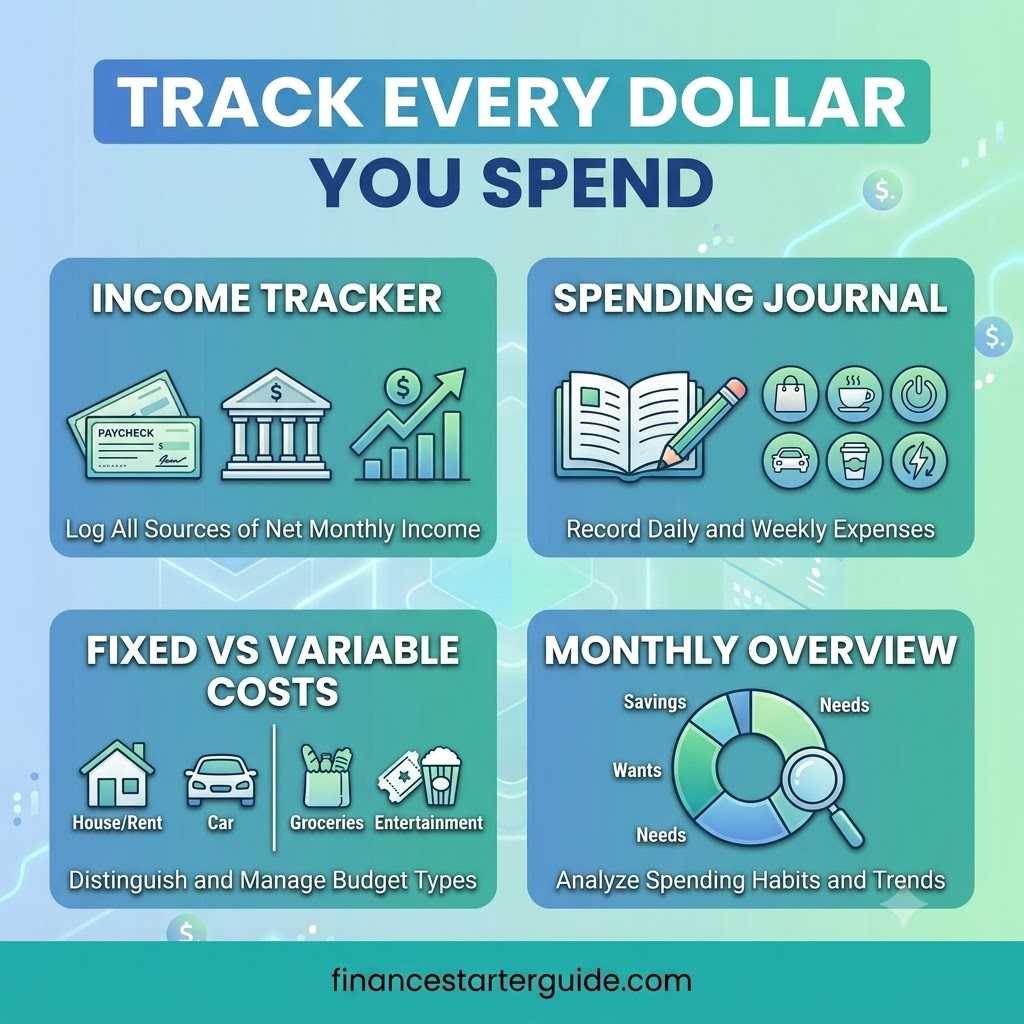
An Expense Tracker Spreadsheet focuses on recording every purchase you make. It works alongside any budget template and helps you identify spending habits.
Typical Categories
- Food
- Transportation
- Housing
- Shopping
- Entertainment
- Utilities
- Healthcare
- Education
- Miscellaneous
Why It Works
Small purchases often go unnoticed. Spending $8 here and $12 there can quietly add up to hundreds of dollars every month. An expense tracker makes these habits visible.
Printable Budget Templates vs Digital Budget Templates
Many beginners wonder whether they should use paper budget worksheets or digital spreadsheets. The answer depends on your personal preference.
Printable Budget Templates
Advantages
- Easy to use
- No computer required
- Great for visual learners
- Encourages mindful budgeting
Disadvantages
- Requires printing
- Harder to edit
- Manual calculations
Digital Budget Templates
Advantages
- Automatic calculations
- Accessible anywhere
- Easy to update
- Can create charts and graphs
- Cloud backup available
Disadvantages
- Requires a computer or smartphone
- May have a learning curve for beginners
Which One Should You Choose?
If you’re just getting started, try both for one month. Many people discover they prefer digital templates for convenience, while others enjoy physically writing their budgets.
How to Choose the Right Budget Template
Not every template works for every lifestyle. Use this guide to choose the best option.
| Your Situation | Best Template |
|---|---|
| First-time budgeter | Monthly Budget Template |
| Wants a simple system | 50/30/20 Budget |
| Serious about saving | Zero-Based Budget |
| Weekly paycheck | Weekly Budget Planner |
| Family budgeting | Household Budget Spreadsheet |
| Paying off debt | Debt Payoff Template |
| Saving for a goal | Savings Goal Tracker |
| Wants spending insights | Expense Tracker |
Choosing a template that matches your lifestyle increases the likelihood that you’ll stick with budgeting long term.
Example Monthly Budget
Here’s a sample budget for someone earning $4,000 per month after taxes.
| Category | Amount |
|---|---|
| Income | $4,000 |
| Housing | $1,200 |
| Utilities | $250 |
| Groceries | $500 |
| Transportation | $300 |
| Insurance | $180 |
| Entertainment | $250 |
| Savings | $800 |
| Debt Payments | $300 |
| Miscellaneous | $220 |
This example demonstrates how every dollar can be assigned a purpose while still leaving room for savings and leisure.
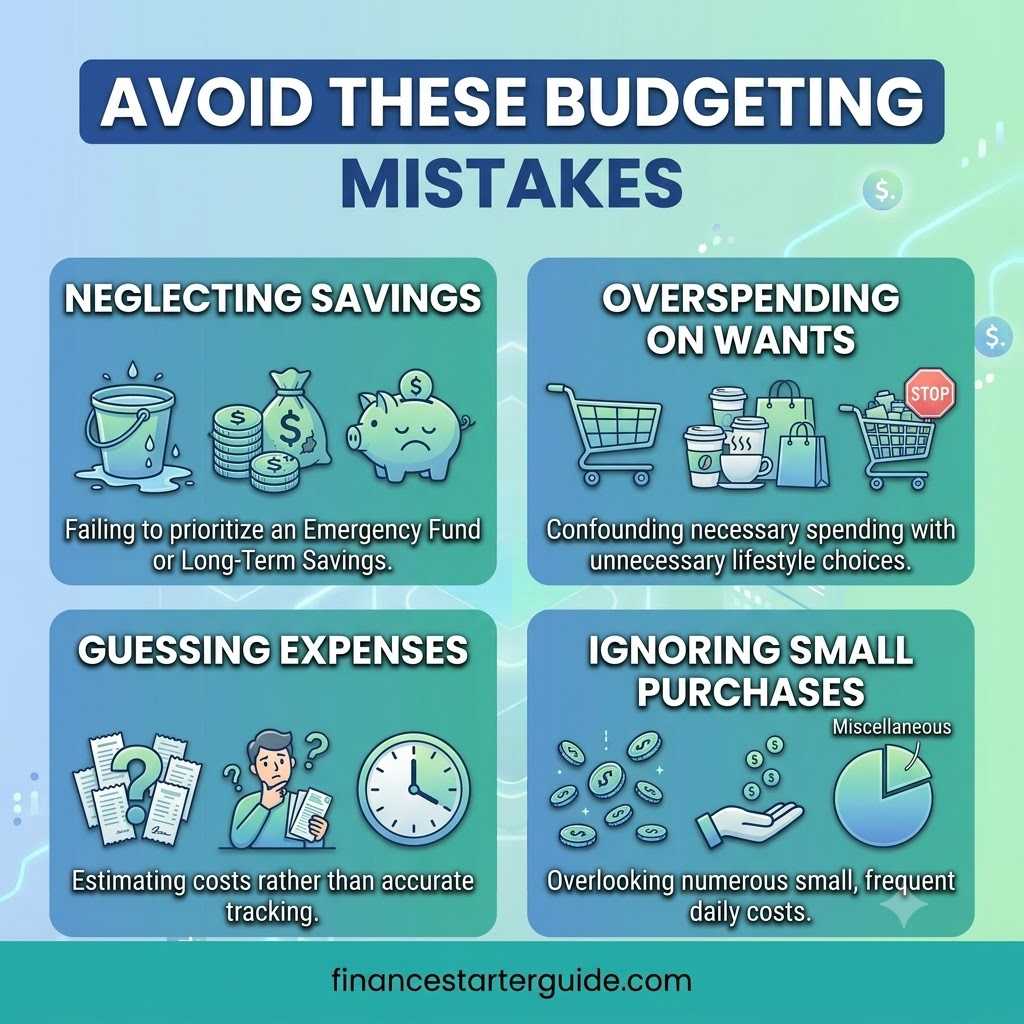
Common Budgeting Mistakes Beginners Make
Even the best budget template won’t work if it’s used incorrectly. Avoid these common mistakes.
1. Forgetting Irregular Expenses
Many people budget for monthly bills but forget annual insurance premiums, holidays, birthdays, or vehicle maintenance.
Solution
Create a sinking fund for irregular expenses and contribute to it every month.
2. Setting Unrealistic Spending Limits
An overly restrictive budget is difficult to maintain.
Solution
Allow yourself reasonable amounts for dining out, hobbies, and entertainment.
3. Not Tracking Spending
Creating a budget is only the first step. If you don’t compare your actual spending to your budget, you won’t know what’s working.
Solution
Review your budget at least once each week.
4. Ignoring Savings
Many people save only if money is left over.
Solution
Treat savings as a required monthly expense by paying yourself first.
5. Giving Up Too Quickly
Your first budget probably won’t be perfect.
Adjust it every month until it reflects your real spending habits.
Tips to Make Any Budget Template More Effective
Use these proven strategies to get the most from your budget.
- Review your budget every Sunday.
- Automate savings transfers.
- Track every expense, even small ones.
- Cancel subscriptions you no longer use.
- Compare grocery prices before shopping.
- Avoid impulse purchases by waiting 24 hours.
- Increase savings whenever your income increases.
- Celebrate small financial wins to stay motivated.
These habits often have a greater impact than choosing the “perfect” template.
Free Tools That Work Well With Budget Templates
Many free tools complement your budget template and make managing money even easier.
- Spreadsheet software for customizable budgets
- Banking apps with spending insights
- Expense tracking apps
- Savings goal trackers
- Calendar reminders for bill due dates
- Cloud storage for backing up budget files
Combining a template with simple digital tools creates a more efficient budgeting system.
Budgeting Habits That Build Long-Term Wealth
Budgeting isn’t about restricting yourself it’s about creating intentional financial habits.
People who consistently budget are more likely to:
- Build emergency funds
- Avoid unnecessary debt
- Save for retirement
- Reach financial goals faster
- Reduce financial anxiety
- Improve their credit habits by paying bills on time
Think of your budget as a roadmap that guides your financial decisions month after month.
Frequently Asked Questions
What is the best free budget template for beginners?
The best free budget template for beginners is a Monthly Budget Template because it includes income, expenses, savings, and debt payments in one easy-to-use worksheet. It works well for individuals, couples, and families.
Is a printable budget template better than a spreadsheet?
Neither option is universally better. Printable templates are ideal if you prefer writing things down, while spreadsheets automatically calculate totals and are easier to update.
How often should I update my budget?
Update your budget at least once a week and perform a complete review at the end of every month. This helps you identify overspending early and adjust your plan before the next month begins.
Can I budget if my income changes every month?
Yes. If your income varies, calculate your average monthly income from the past three to six months. Build your budget around the lowest expected income and treat additional earnings as extra savings or debt payments.
What should be included in every budget?
Every budget should include:
- Income
- Fixed expenses
- Variable expenses
- Savings
- Debt payments
- Emergency fund contributions
- Financial goals
Are free budget templates good enough?
Absolutely. Most beginners don’t need expensive budgeting software. A well-designed free template provides everything needed to organize finances and develop better money habits.
How to Stay Consistent With Your Budget
Creating a budget is only the first step. The real challenge is following it consistently.
Here are some habits that can help:
- Schedule a weekly budget review.
- Check your bank account before making large purchases.
- Set realistic spending limits.
- Build an emergency fund to handle unexpected expenses.
- Celebrate small milestones, such as paying off a credit card or reaching a savings goal.
- Review subscriptions every few months.
- Increase your savings whenever your income increases.
Consistency matters far more than creating a “perfect” budget.
Monthly Budget Review Checklist
At the end of every month, ask yourself:
- Did I stay within my spending limits?
- Which categories went over budget?
- Did I save as much as planned?
- Did I make extra debt payments?
- Were there unexpected expenses?
- What can I improve next month?
A monthly review helps turn budgeting into a long-term habit rather than a one-time exercise.
Conclusion
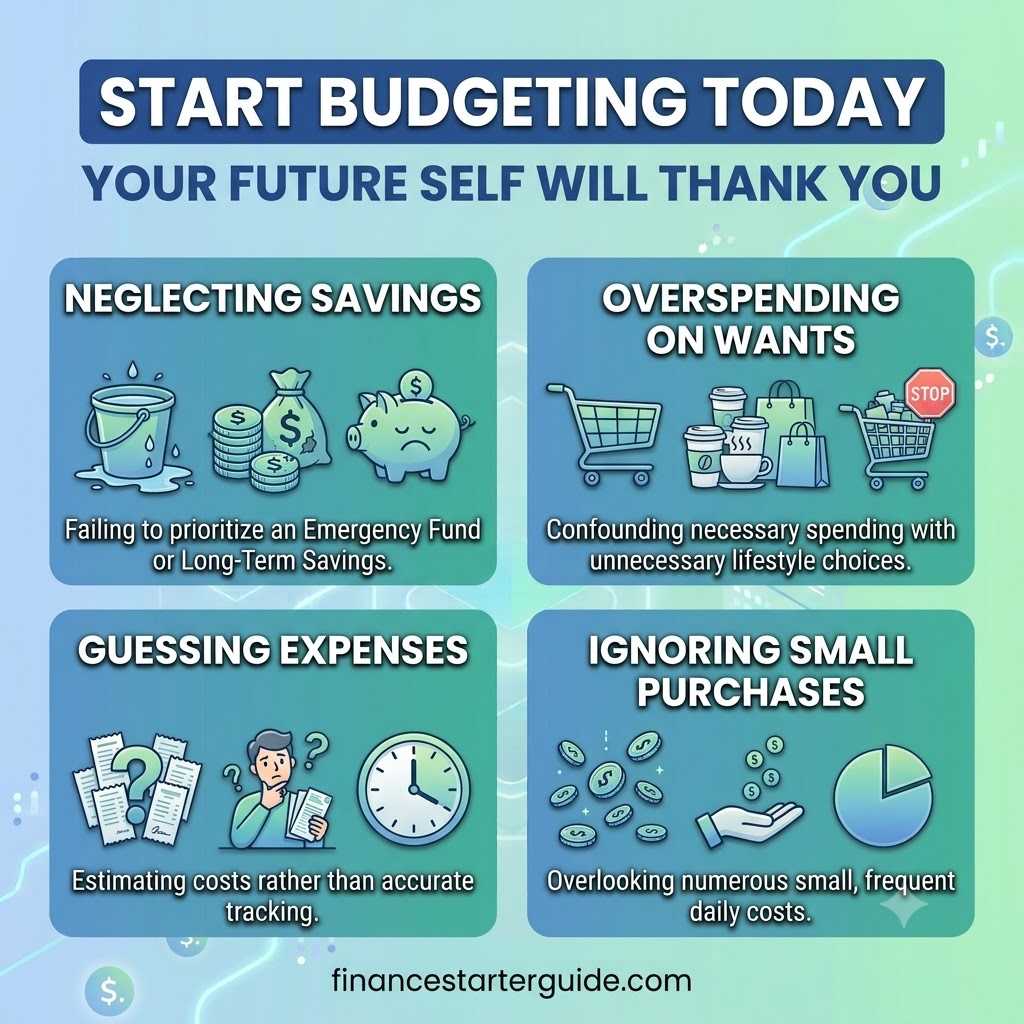
A budget template is more than just a worksheet it is a practical tool that helps you take control of your finances. Whether your goal is to save for a home, eliminate debt, build an emergency fund, or simply understand where your money goes each month, using a free budget template provides a clear and organized starting point.
The best template is the one you’ll actually use consistently. Start with a simple monthly budget, review it regularly, and make small adjustments as your financial situation changes. Over time, those consistent habits can lead to better financial decisions, greater confidence, and long-term financial stability.
Remember that budgeting isn’t about restricting your life. It’s about giving every dollar a purpose so you can spend with confidence while working toward your goals.
- How to Create a Monthly Budget That Actually Works
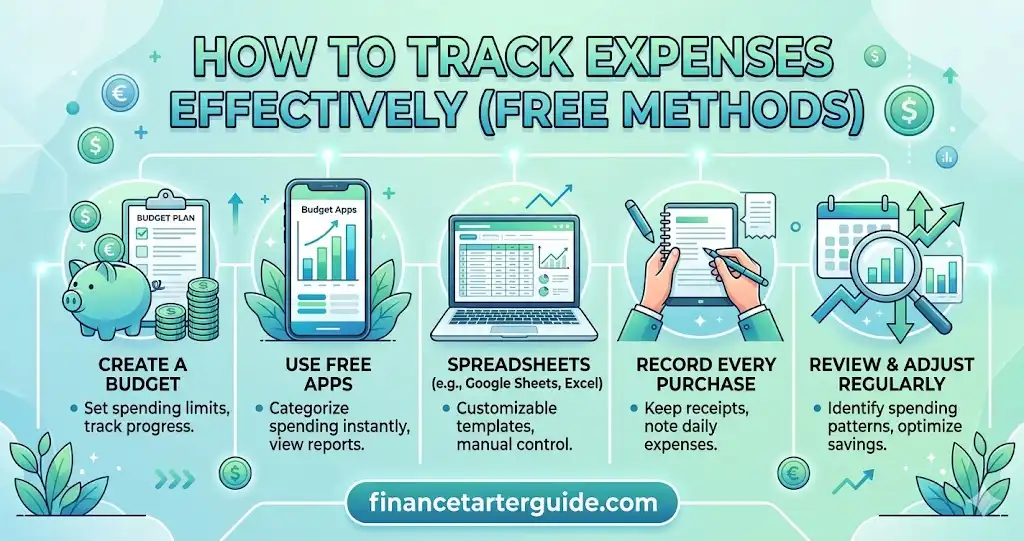
- How to Track Expenses Effectively (Free Methods)
- Best Budgeting Apps in the USA (2026 Guide)
- Emergency Fund: How Much Do You Really Need?
- How to Increase Your Savings Without Increasing Income
- How to Build Good Financial Habits That Stick
- Best Side Hustles to Save More Money (USA)
- How to Stop Living Paycheck to Paycheck
- Best Financial Tools & Apps in the USA
- How Millennials Can Build Wealth from Scratch
Disclaimer: This article is for educational and informational purposes only and does not constitute financial, investment, tax, or legal advice.