One of the biggest reasons people struggle financially is simple: they don’t know where their money goes.
At the beginning of the month, you may receive your paycheck and feel financially secure. Yet by the end of the month, you wonder why your bank account balance is lower than expected.
This happens because small expenses often go unnoticed. Coffee purchases, food deliveries, subscriptions, online shopping, and impulse buys slowly drain your finances.
Learning how to track expenses effectively is one of the most powerful financial skills you can develop. Expense tracking gives you complete visibility over your spending habits and helps you:
✅ Save more money
✅ Build an emergency fund
✅ Reduce financial stress
✅ Pay off debt faster
✅ Achieve financial goals
The good news is that expense tracking doesn’t require expensive software. There are many free and simple ways to monitor your spending.
This guide will teach you exactly how to track expenses effectively using free methods that anyone can start today.
🔥 Quick Answer
How Do You Track Expenses Effectively?
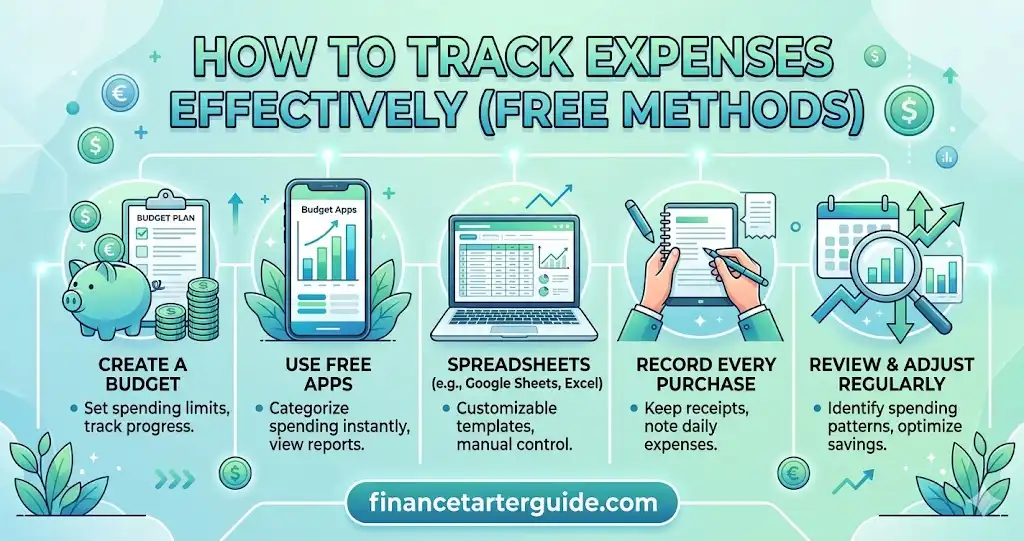
To track expenses effectively:
- Record every expense
- Categorize your spending
- Use a budgeting app or spreadsheet
- Review expenses weekly
- Set spending limits
- Monitor subscriptions
- Adjust your budget regularly
Tracking expenses consistently helps identify wasteful spending and improve financial habits.
Why Expense Tracking Matters
Expense tracking isn’t just about writing down purchases.
It helps you:
Identify Spending Patterns
You discover where your money actually goes.
Reduce Overspending
Awareness often reduces unnecessary purchases.
Improve Saving Habits
You can redirect money toward savings goals.
Create Better Budgets
Budgets work much better when based on real spending data.
Reach Financial Goals Faster
Expense tracking creates accountability.
Common Reasons People Lose Track of Money
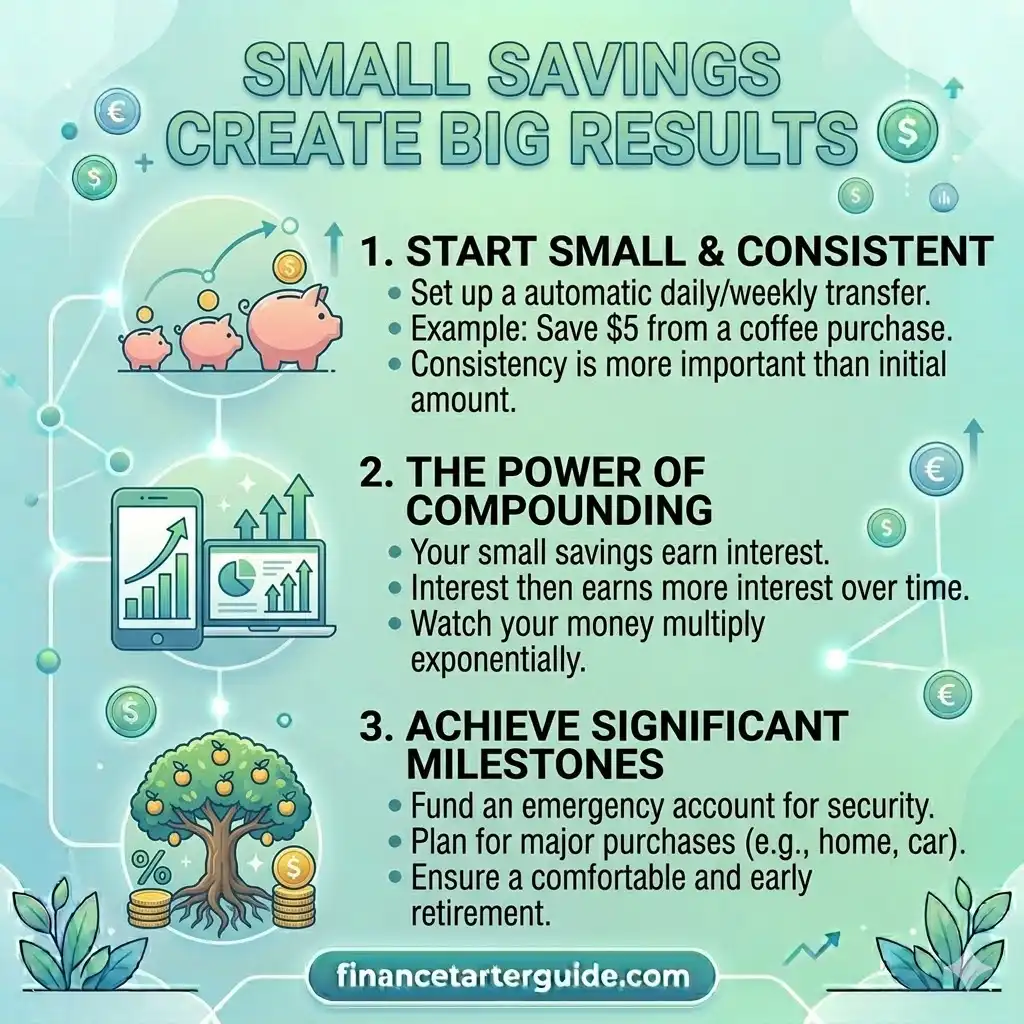
Small Purchases Add Up
A $5 daily coffee:
$5 × 30 days = $150 per month
That’s:
$1,800 per year.
Multiple Subscriptions
Many people forget about:
- Streaming services
- Cloud storage
- App subscriptions
- Membership fees
Impulse Buying
Online shopping makes spending easier than ever.
Not Reviewing Bank Statements
Many expenses remain unnoticed.
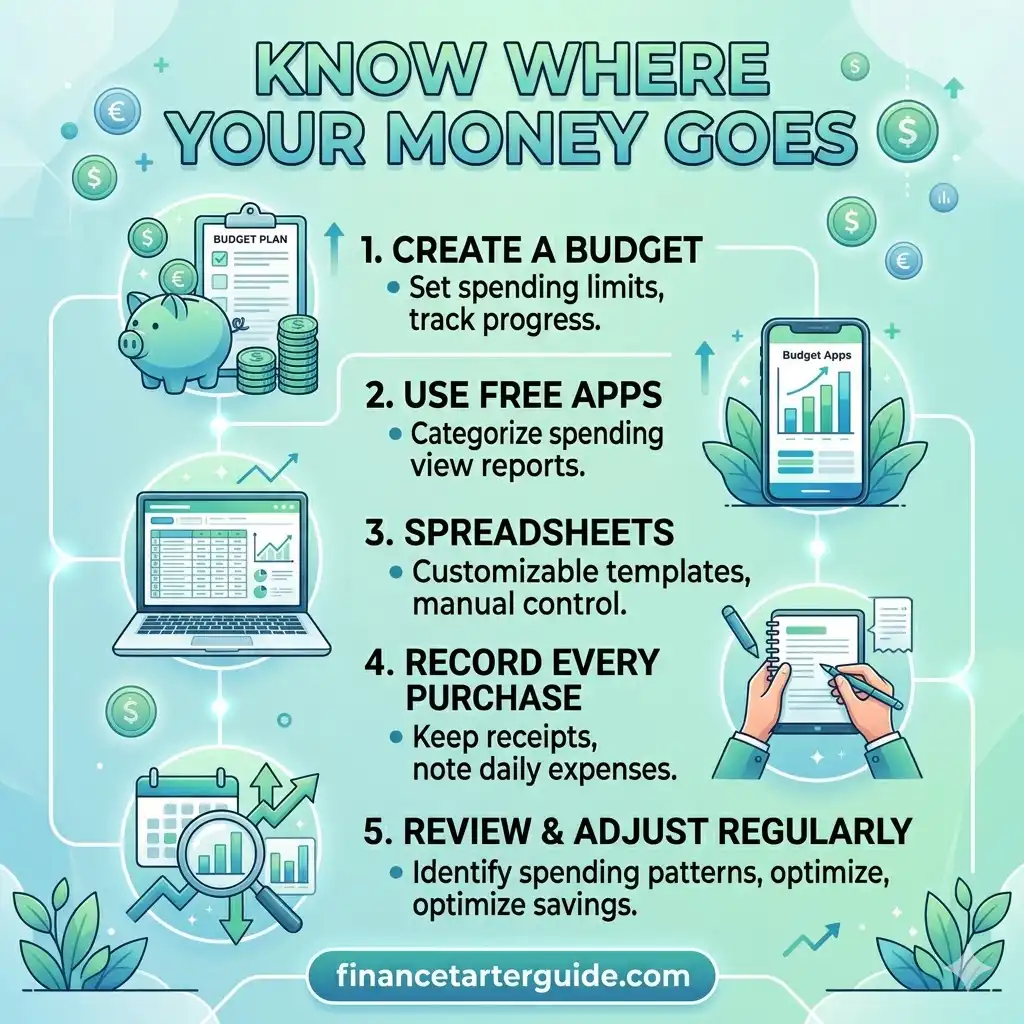
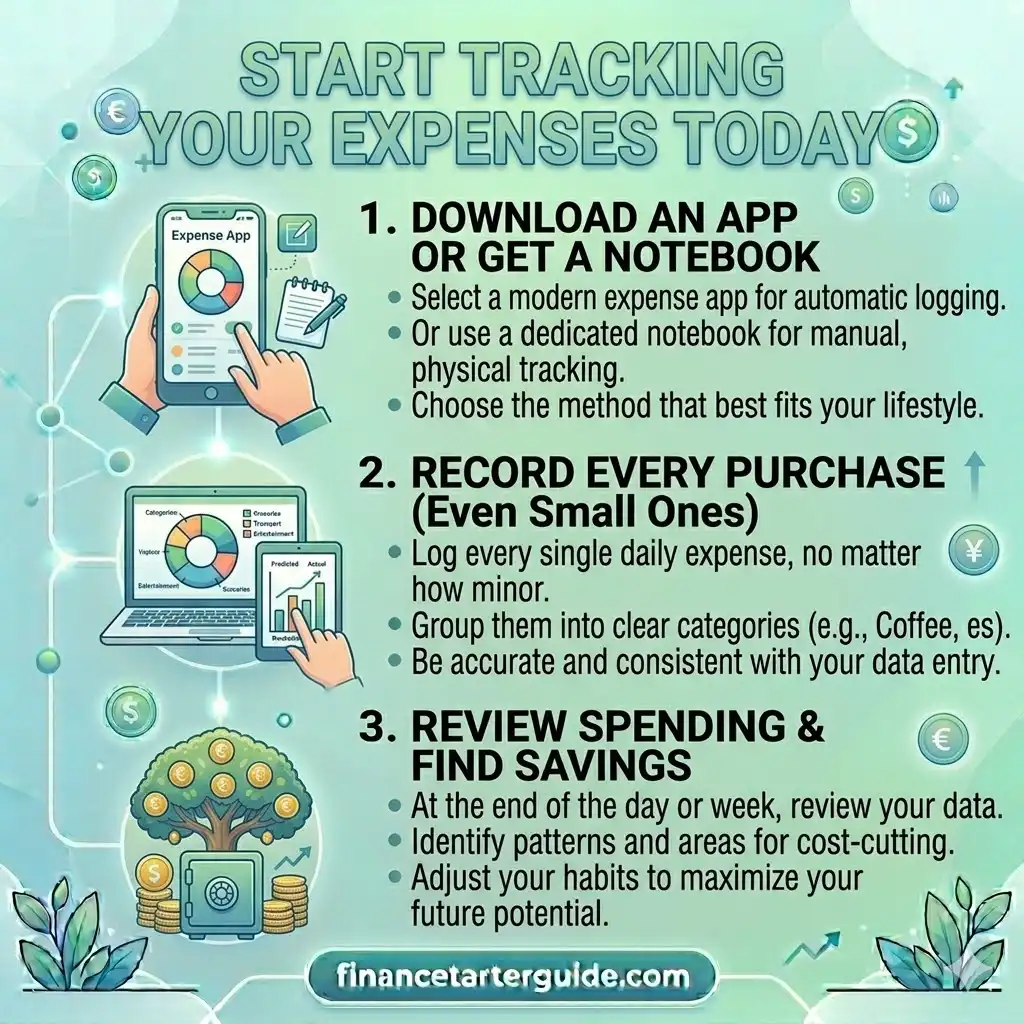
Step 1: Record Every Expense
The first rule of expense tracking:
Track everything.
Include:
- Rent
- Groceries
- Coffee
- Transportation
- Entertainment
- Online shopping
- Bills
- Subscriptions
Small purchases matter.
Step 2: Categorize Your Expenses
Categories make spending easier to understand.
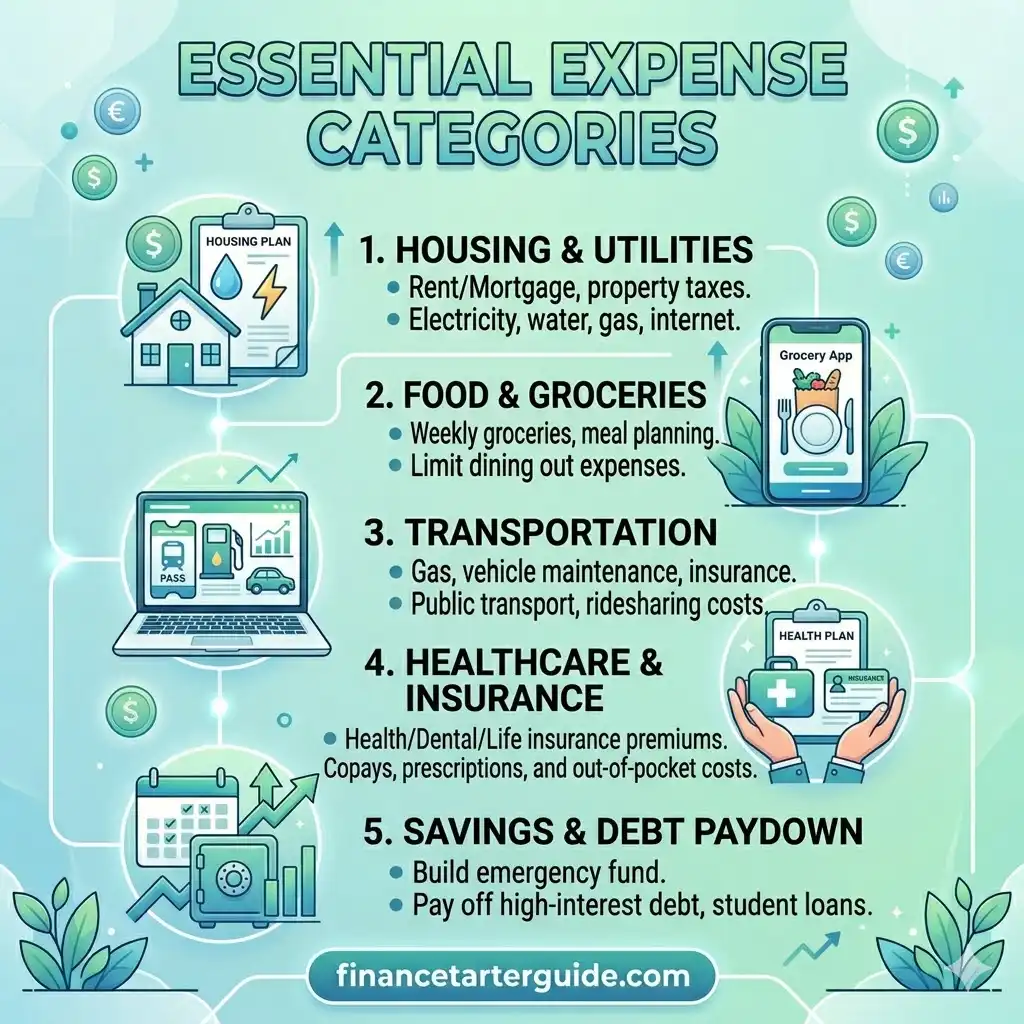
Recommended categories:
Housing
- Rent
- Utilities
- Internet
Transportation
- Fuel
- Public transportation
- Maintenance
Food
- Groceries
- Restaurants
- Coffee
Entertainment
- Streaming services
- Movies
- Games
Savings
- Emergency fund
- Investments
- Retirement contributions
Miscellaneous
- Gifts
- Unexpected expenses
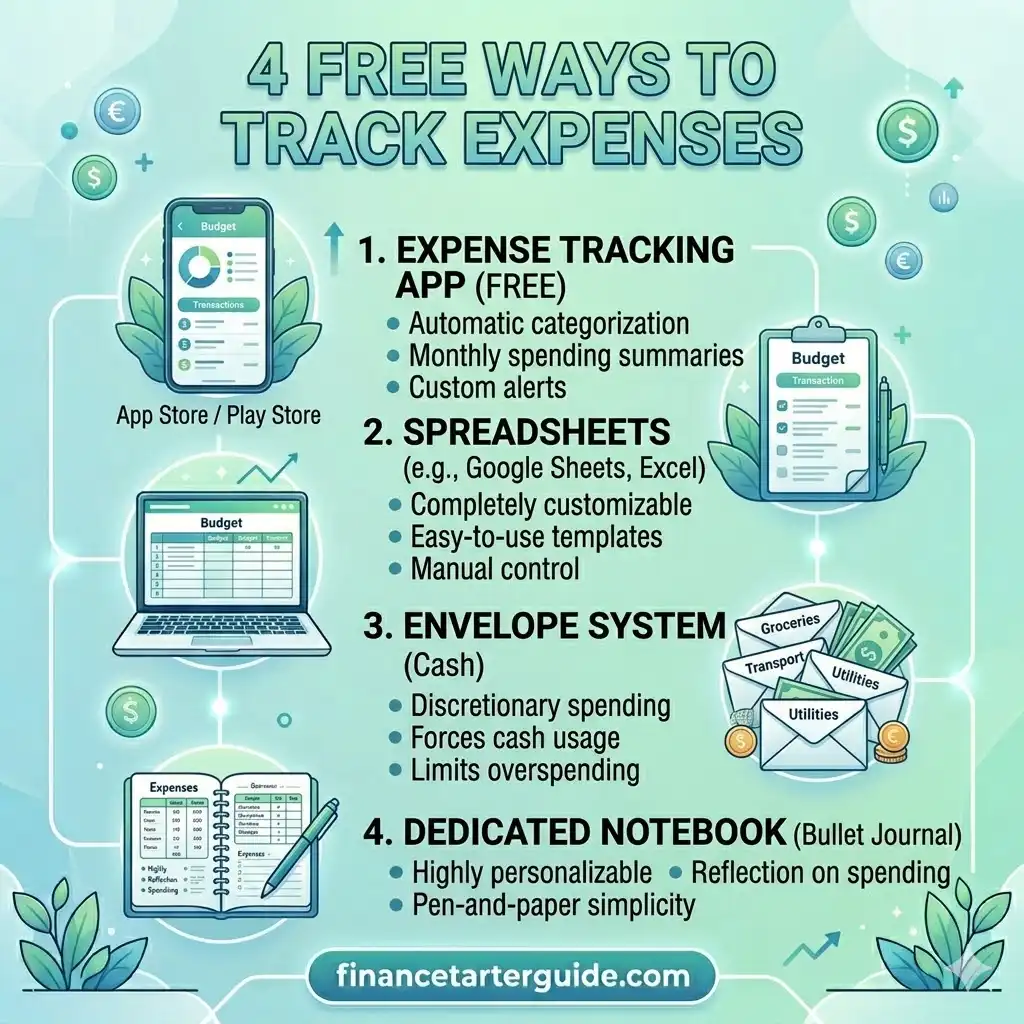
Step 3: Use Free Expense Tracking Methods
Method 1: Spreadsheet Tracking
One of the easiest methods.
Columns:
| Date | Category | Description | Amount |
|---|
Advantages:
✅ Free
✅ Flexible
✅ Customizable
Disadvantages:
❌ Requires manual entry.
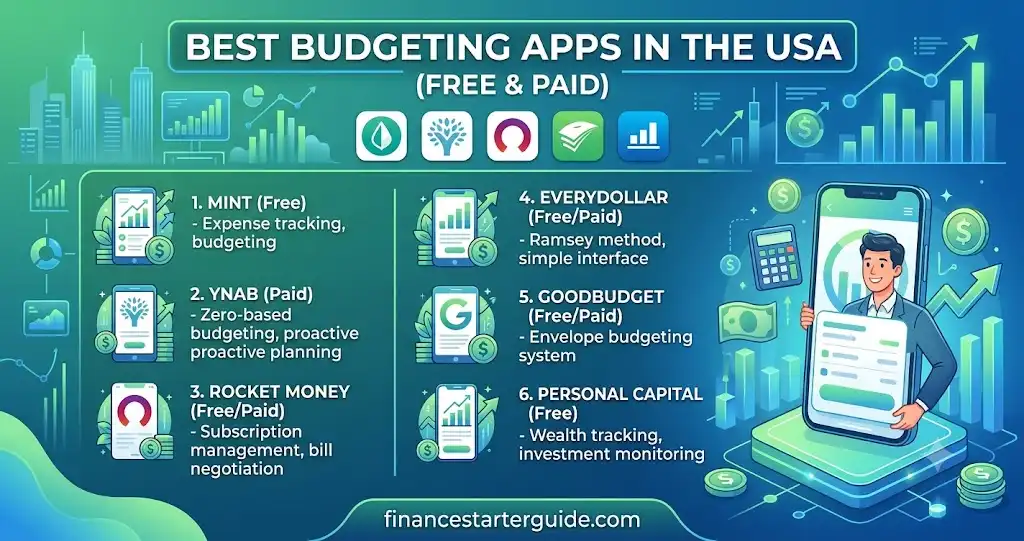
Method 2: Budgeting Apps
Popular free options:
- Rocket Money
- Goodbudget
- EveryDollar
- Empower Personal Dashboard
Advantages:
✅ Automatic tracking
✅ Spending reports
✅ Budget planning
Disadvantages:
❌ Some premium features require payment.
Method 3: Notebook Method
Simply write expenses in a notebook.
Advantages:
✅ Completely free
✅ Easy to start
Disadvantages:
❌ Requires discipline.
Method 4: Bank Statements
Review transactions weekly.
Advantages:
✅ Accurate records
✅ Easy review process
Disadvantages:
❌ Less detailed categorization.
Step 4: Review Expenses Weekly
Weekly reviews help catch problems early.
Ask yourself:
- Did I overspend?
- Which category increased?
- Were purchases necessary?
- Can I reduce spending next week?
Weekly reviews are easier than monthly surprises.
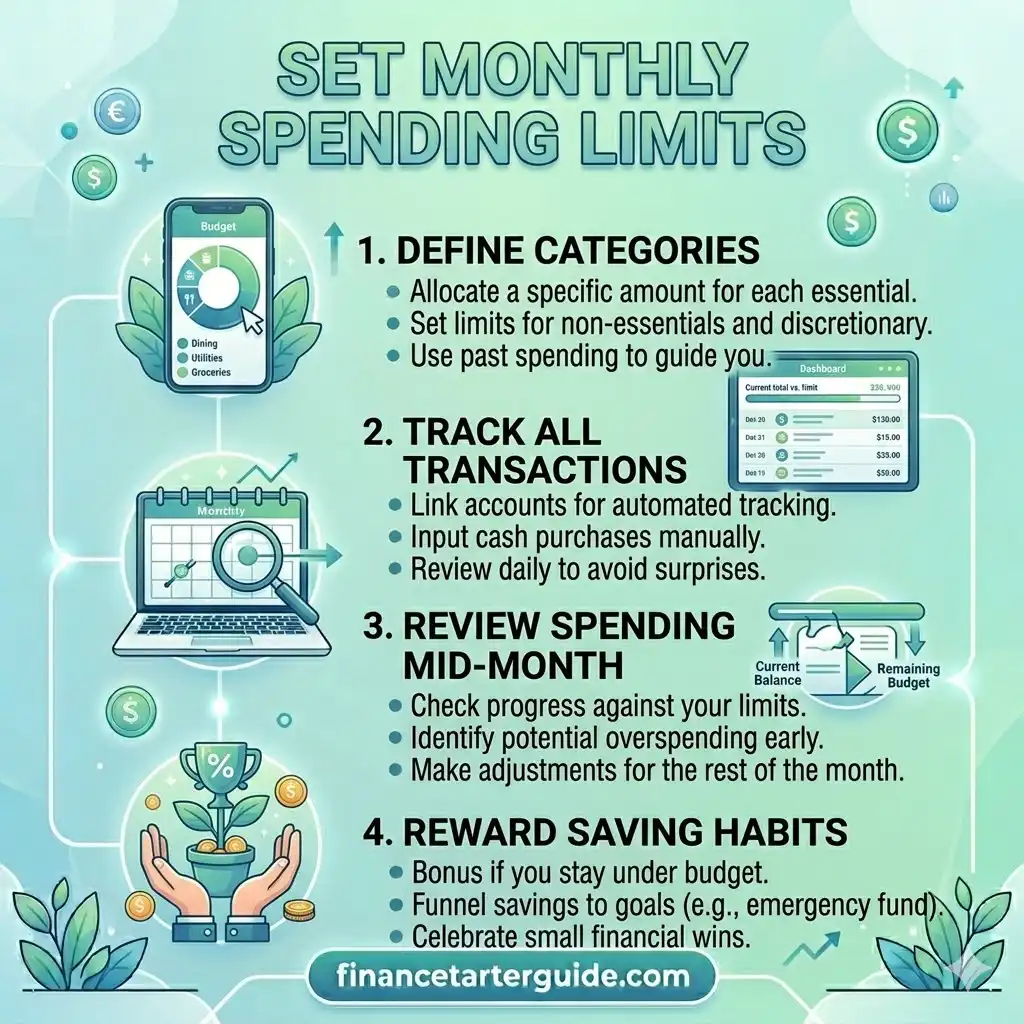
Step 5: Set Spending Limits
Example monthly budget:
Income: $4,000
| Category | Limit |
|---|---|
| Housing | $1,400 |
| Transportation | $400 |
| Food | $600 |
| Entertainment | $300 |
| Savings | $800 |
| Miscellaneous | $500 |
Spending limits create financial boundaries.
Step 6: Monitor Subscriptions
Subscriptions quietly consume income.
Check:
- Video streaming services
- Music services
- Mobile apps
- Gym memberships
- Software subscriptions
Cancel services you no longer use.
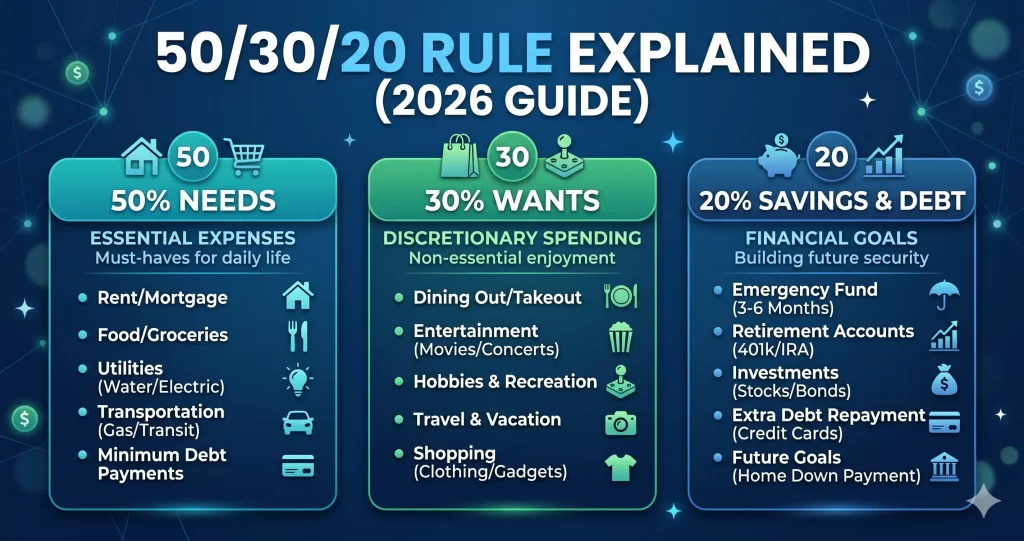
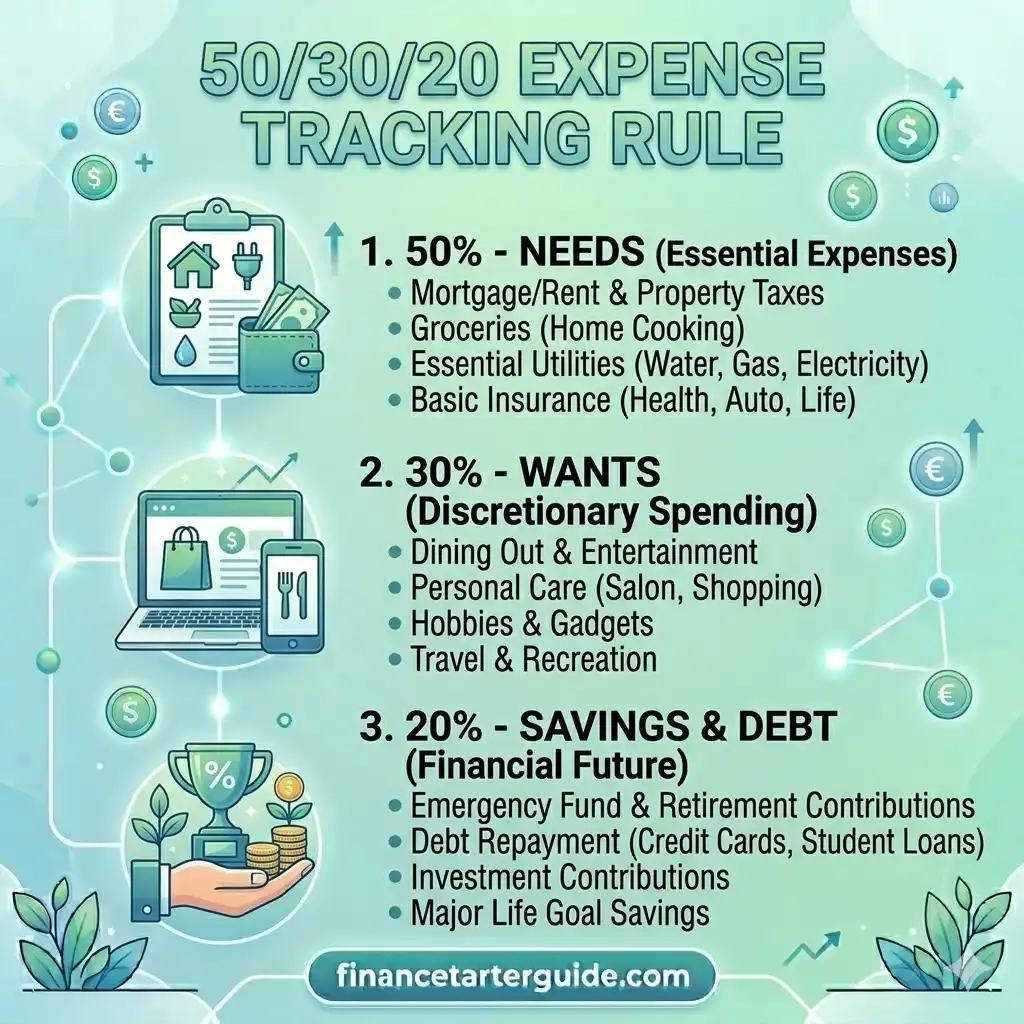
Step 7: Use the 50/30/20 Rule
A simple framework:
50%
Needs
30%
Wants
20%
Savings and debt payments
This method naturally improves expense control.
Common Expense Tracking Mistakes
❌ Ignoring Small Purchases
Small expenses become large annual costs.
❌ Tracking Inconsistently
Missing entries reduce accuracy.
❌ Not Reviewing Data
Tracking alone isn’t enough.
❌ Creating Too Many Categories
Keep categories simple.
❌ Forgetting Cash Expenses
Cash spending should also be recorded.
How Expense Tracking Helps You Save Money
Expense tracking often reveals:
- Unused subscriptions
- Frequent dining out
- Impulse purchases
- Duplicate spending
- Hidden fees
Even reducing expenses by $200 monthly creates:
$2,400 per year in savings.
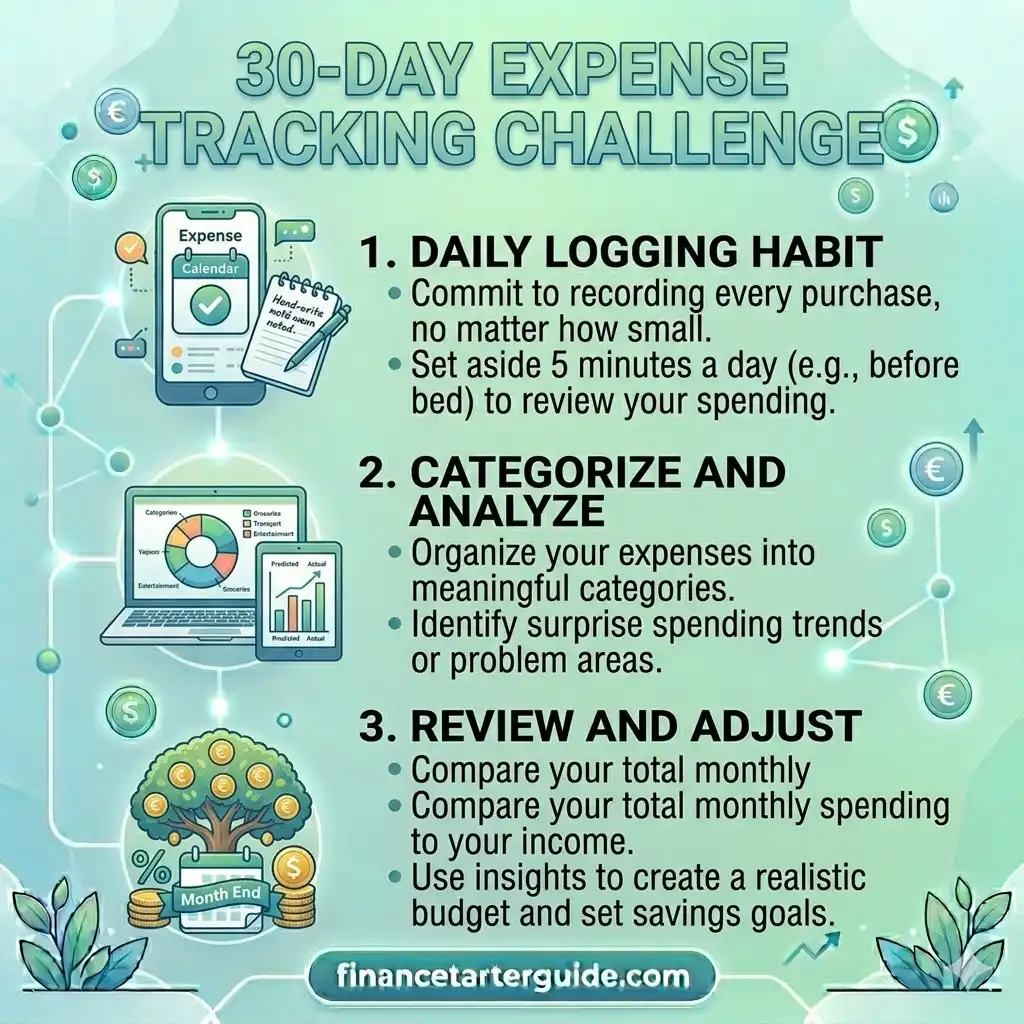
30-Day Expense Tracking Challenge
Week 1
Record every purchase.
Week 2
Create categories.
Week 3
Identify unnecessary spending.
Week 4
Adjust spending habits.
By Day 30, you’ll have a clear understanding of your financial habits.
FAQs
What is the best free way to track expenses?
Using a spreadsheet, budgeting app, or notebook are all effective free methods.
How often should I track expenses?
Ideally, every day. At minimum, review expenses weekly.
Why is expense tracking important?
Expense tracking helps identify spending habits, reduce waste, and improve saving.
Can expense tracking help save money?
Yes. Most people discover unnecessary expenses once they begin tracking.
Which expense tracking app is best?
Rocket Money, EveryDollar, Goodbudget, and Empower are popular beginner-friendly choices.
Conclusion
Learning how to track expenses effectively can completely transform your financial life.
The process is simple:
✅ Record every expense
✅ Categorize spending
✅ Review expenses weekly
✅ Set spending limits
✅ Monitor subscriptions
✅ Stay consistent
Small financial improvements repeated every month often create life-changing results.
- What Is a Budget? (USA Beginner Guide)
- Best Budgeting Apps in the USA
- 50/30/20 Rule Explained
- How to Save Money Fast on a Low Income
- Top 15 Money Saving Tips That Actually Work
- Emergency Fund: How Much Do You Really Need?
Disclaimer: This article is for educational and informational purposes only and does not constitute financial, investment, tax, or legal advice.