
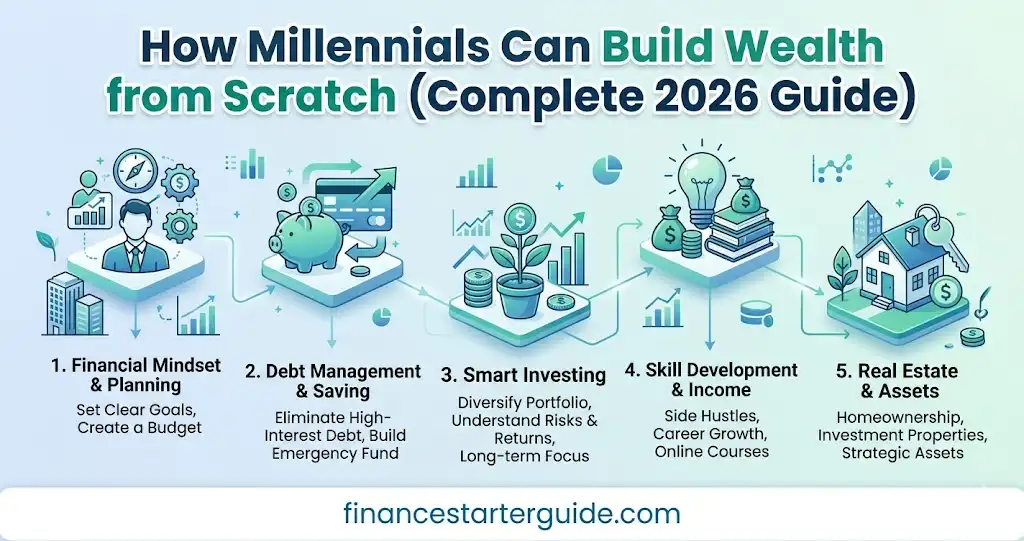
Many millennials feel like building wealth is harder than ever.
Rising housing costs, student loan debt, inflation, and stagnant wages have created financial challenges that previous generations did not face to the same extent. Despite these obstacles, millions of millennials are successfully building wealth by following proven financial strategies.
The truth is that wealth is rarely built overnight. Most financially successful people create wealth through consistent habits, smart investing, disciplined budgeting, and long-term planning.
If you’re starting with little savings, no investments, or even debt, this guide will show you exactly how millennials can build wealth from scratch.
Quick Answer
How Can Millennials Build Wealth from Scratch?
Millennials can build wealth from scratch by:
- Creating a budget
- Building an emergency fund
- Paying off high-interest debt
- Increasing income
- Investing consistently
- Using retirement accounts
- Creating multiple income streams
- Avoiding lifestyle inflation
- Investing for the long term
- Continuously improving financial skills
Why Building Wealth Matters
Building wealth provides:
✅ Financial security
✅ Freedom of choice
✅ Reduced stress
✅ Early retirement opportunities
✅ Protection against emergencies
✅ Generational wealth creation
Without wealth, even high earners can remain financially vulnerable.
The Biggest Financial Challenges Millennials Face
Student Loan Debt
Many millennials begin adulthood with significant debt.
Rising Housing Costs
Home prices have increased dramatically in many areas.
Inflation
Everyday expenses continue to rise.
Lifestyle Pressure
Social media often encourages unnecessary spending.
Delayed Retirement Saving
Many millennials started investing later than previous generations.
Despite these challenges, wealth building remains achievable.
Step 1: Create a Budget That Works
A budget is the foundation of wealth building.
Without tracking money, it’s difficult to improve financial results.
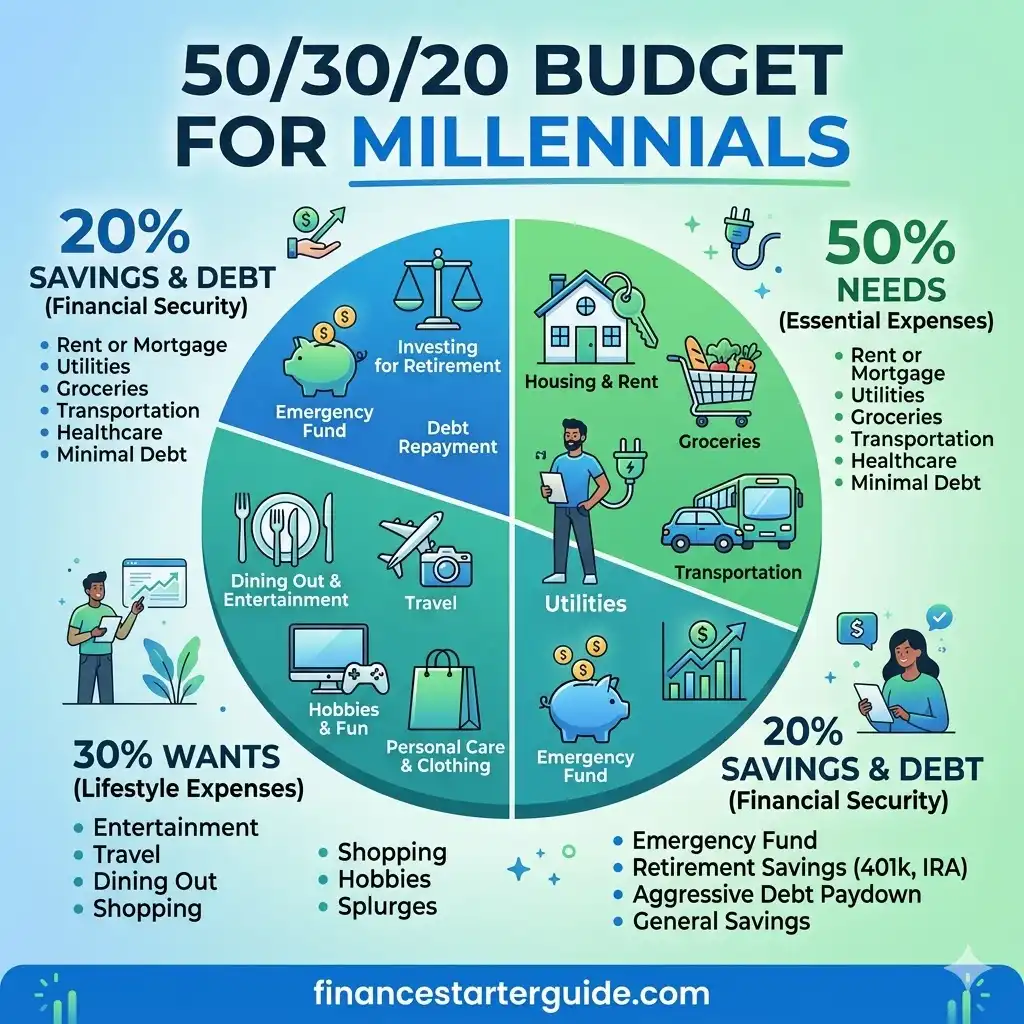
Use the 50/30/20 Rule
- 50% Needs
- 30% Wants
- 20% Savings and Investments
Example:
Monthly Income: $4,000
- Needs: $2,000
- Wants: $1,200
- Savings: $800
This simple framework helps create consistency.
Step 2: Build an Emergency Fund
An emergency fund prevents financial setbacks from becoming disasters.
Experts typically recommend:
- Minimum: $1,000 starter fund
- Goal: 3–6 months of expenses
Emergency funds help cover:
- Medical bills
- Job loss
- Car repairs
- Unexpected expenses
Store emergency savings in a high-yield savings account.
Step 3: Eliminate High-Interest Debt
Debt can significantly slow wealth growth.
Prioritize:
Credit Card Debt
Often carries the highest interest rates.
Personal Loans
Pay aggressively when possible.
Payday Loans
Eliminate immediately if applicable.
Debt Snowball Method
Pay smallest balances first.
Debt Avalanche Method
Pay highest interest rates first.
Both methods work.
Consistency matters most.

Step 4: Increase Your Income
Income growth accelerates wealth building.
Ways to increase income:
Ask for a Raise
Many workers never negotiate salary.
Change Jobs
Job changes often produce larger pay increases.
Freelancing
Offer skills online.
Side Hustles
Examples:
- Freelance writing
- Graphic design
- Tutoring
- Content creation
Start a Small Business
Entrepreneurship can create substantial long-term wealth.
Step 5: Start Investing Early
Investing is where wealth creation accelerates.
Savings alone rarely build significant wealth.
Investments grow through compound interest.
Example
Invest:
- $300 monthly
- 8% annual return
- 30 years
Potential value: Over $400,000+
Starting early matters more than investing large amounts later.

Step 6: Maximize Retirement Accounts
Retirement accounts offer major tax advantages.
Popular options include:
401(k)
Employer-sponsored retirement plan.
Traditional IRA
Potential tax deductions.
Roth IRA
Tax-free retirement withdrawals under qualifying conditions.
Employer Matching
Always prioritize employer matches when available.
Employer matching is essentially additional compensation.
Step 7: Build Multiple Income Streams
Most wealthy individuals do not rely on a single income source.
Examples:
Active Income
- Salary
- Freelancing
- Consulting
Passive Income
- Dividend investing
- Rental properties
- Digital products
- Affiliate marketing
Portfolio Income
- Stocks
- ETFs
- Mutual funds
Diversified income increases financial stability.
Step 8: Avoid Lifestyle Inflation
One of the biggest wealth killers is lifestyle inflation.
As income increases:
People often upgrade:
- Cars
- Housing
- Vacations
- Gadgets
Instead:
Increase investments before increasing spending.
This simple habit can dramatically increase net worth.
Step 9: Invest in Yourself
Your skills are often your greatest asset.
Invest in:
- Education
- Certifications
- Professional development
- Communication skills
- Leadership skills
Higher skills often lead to higher income.
Step 10: Focus on Long-Term Wealth
Building wealth is not a 30-day challenge.
It’s a long-term process.
Successful investors think in decades, not weeks.
Avoid:
❌ Get-rich-quick schemes
❌ Emotional investing
❌ Market timing
❌ Constant trading
Instead:
✅ Stay consistent
✅ Invest regularly
✅ Remain patient
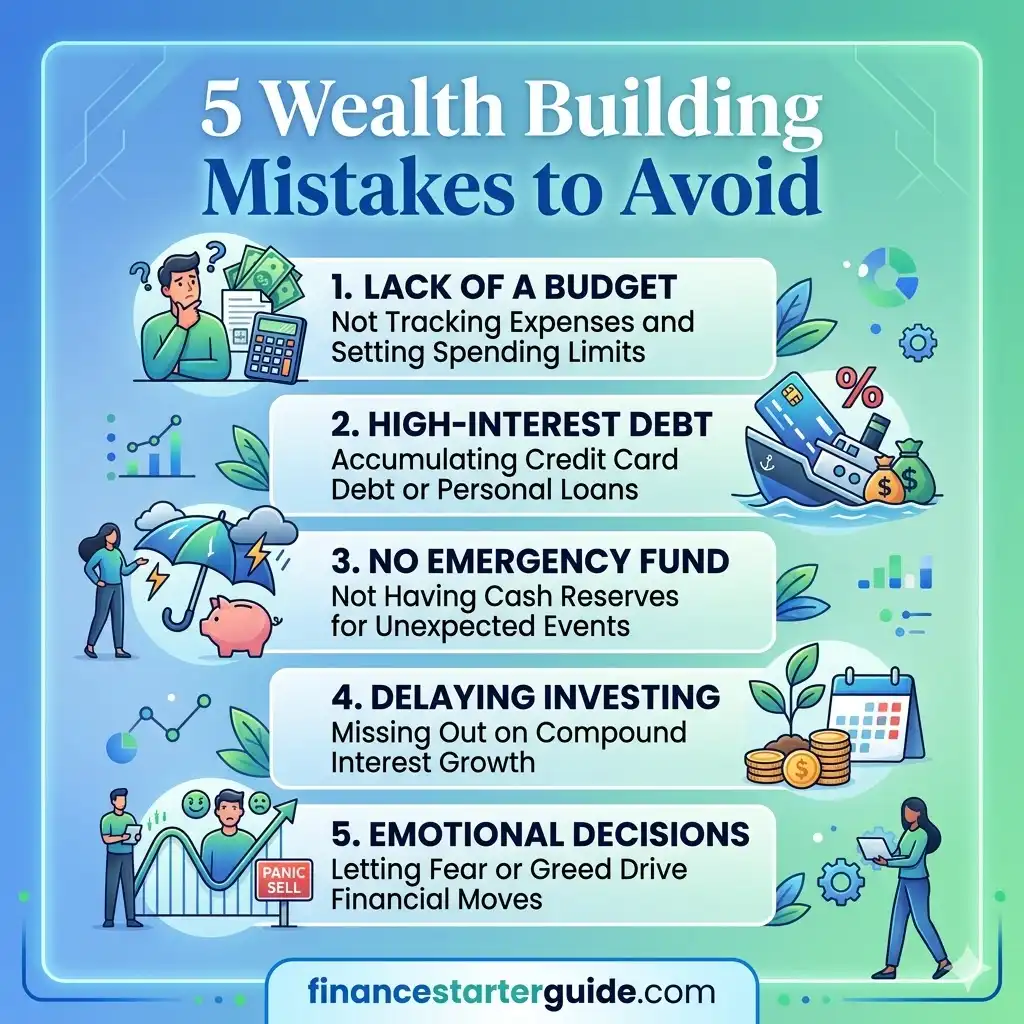
Common Wealth Building Mistakes
Living Beyond Your Means
Spending more than you earn creates long-term problems.
Not Investing
Cash loses purchasing power over time.
Ignoring Retirement
The earlier you start, the easier retirement becomes.
Chasing Trends
Speculative investments can increase risk.
Failing to Budget
Tracking money is essential.

Wealth Building Roadmap for Millennials
Year 1
- Create budget
- Build starter emergency fund
- Pay off high-interest debt
Years 2–3
- Increase savings rate
- Begin investing consistently
Years 4–7
- Grow retirement accounts
- Increase income streams
Years 8–15
- Build substantial investment portfolio
Years 15+
- Focus on financial independence
FAQs
Can millennials still build wealth?
Yes. Despite economic challenges, millennials can build wealth through budgeting, investing, and consistent financial habits.
How much should millennials save?
A common recommendation is saving at least 20% of income when possible.
What is the fastest way to build wealth?
Increasing income while consistently investing is one of the most effective strategies.
Should millennials invest or pay off debt first?
Generally, high-interest debt should be prioritized before aggressive investing.
What is the best investment for beginners?
Broad-market index funds and diversified ETFs are common starting points for beginner investors.
Conclusion
Building wealth from scratch is possible regardless of your starting point.
The process is simple:
- Spend less than you earn
- Save consistently
- Invest regularly
- Increase income
- Avoid unnecessary debt
- Stay committed for the long term
Small actions repeated over many years often create extraordinary financial results.
- What Is a Budget? (USA Beginner Guide)
- 50/30/20 Rule Explained
- How to Save Money Fast on a Low Income
- Emergency Fund: How Much Do You Really Need?
- Best Budgeting Apps in the USA
- How to Stop Living Paycheck to Paycheck
Disclaimer: This article is for educational and informational purposes only and does not constitute financial, investment, tax, or legal advice.